For more than a thousand years, travelers from all across Europe have journeyed to Spain with a final destination: Santiago de Compostela, where the famous Camino de Santiago, or Way of St. James, stretching across Europe, concludes. Thus, northern Spain is interwoven with the Way of St. James from east to west. Some travel for religious reasons, others for cultural and historical reasons, and others for recreation, traversing much of northern Spain and encountering the rich heritage created on this part of the Iberian Peninsula by many peoples.
The mysterious Basque Country, with the chic resort of San Sebastián and the capital Bilbao, offers a truly special experience. The ancient capitals of the medieval kingdoms—Valladolid, Burgos, and León—are adorned with massive cathedrals and numerous churches as a symbol of the close bond between church and secular authority. The rich interiors of the cathedrals take us back to the era of the Reconquista and the heroic victories of El Cid. Like medieval travelers, my wife and I also experienced the highlight of the journey in Santiago de Compostela, whose magnificent monuments stand as a living testament to Spanish architecture.
Journey Through Northern Spain
My wife and I took 15 days for the trip, including travel. Due to COVID-19 among Volotea cabin crew, our flight from Venice to Bilbao was postponed by one day. That left us with 9 days for sightseeing together and 3 days for my cycling along the Camino Francés.
We flew into the Basque capital in the afternoon and picked up a car at the airport. The Basque Country was mostly under clouds and rain. Nevertheless, we saw all the main sights except the characteristic Basque singing.

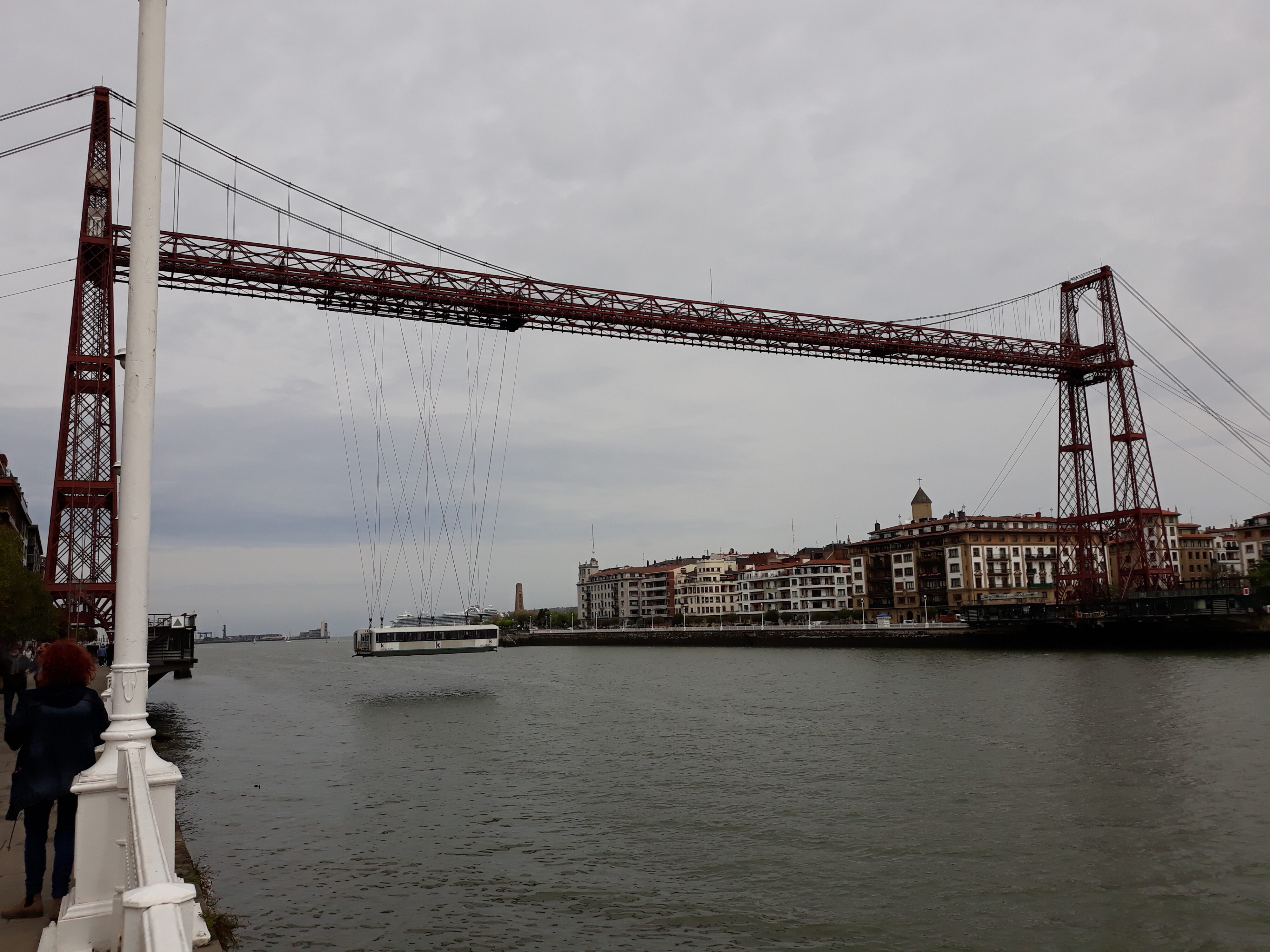
The Basque Country is known for its beaches, gleaming modern architecture, and resilient, hardworking locals. Famous beaches stretch along the coast (San Sebastián), though because of the Atlantic, the swimming season starts later. So we planned a loop from Bilbao to the coast and back. Along the way, we visited: Portugalete on the Bay of Biscay with the famous bridge Puente de Vizcaya (Bizkaiko Zubia in Euskera), Gaztelugatxe, and Guernica.
Puente de Vizcaya (Bizkaiko Zubia )
The Nervión River, flowing through Bilbao, empties into the sea 14 km downstream at the town of Portugalete, famous for its 1893 transporter bridge. The bridge is 164 m long and 45 m high so ships can sail beneath it. Its suspended gondola can carry 6 cars and dozens of passengers across the river in a minute and a half. Visitors can also climb to the top of the bridge and cross the river on foot via the walkway platform, which offers a great view.

It is a picturesque rocky islet with a small church on top. Along this stretch of the Basque coast, the sea undercuts the cliffs to form stone arches, making the coastline very rugged and inaccessible. We reach the islet across a built footbridge, and then the path winds up 241 stone steps with a stone railing to the top, where a chapel dedicated to John the Baptist stands. Beside it is a bell that brings good luck to everyone who rings it.



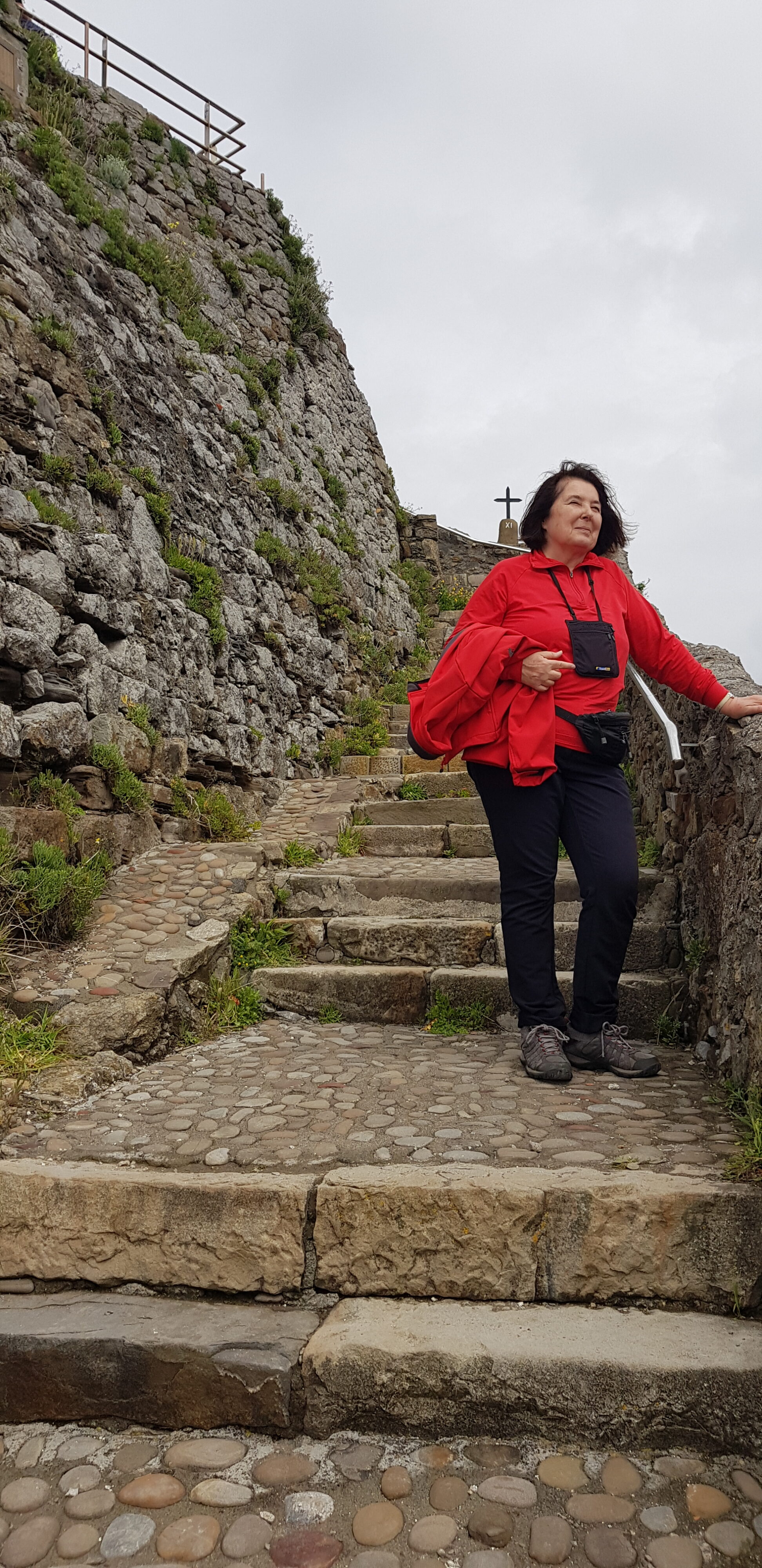
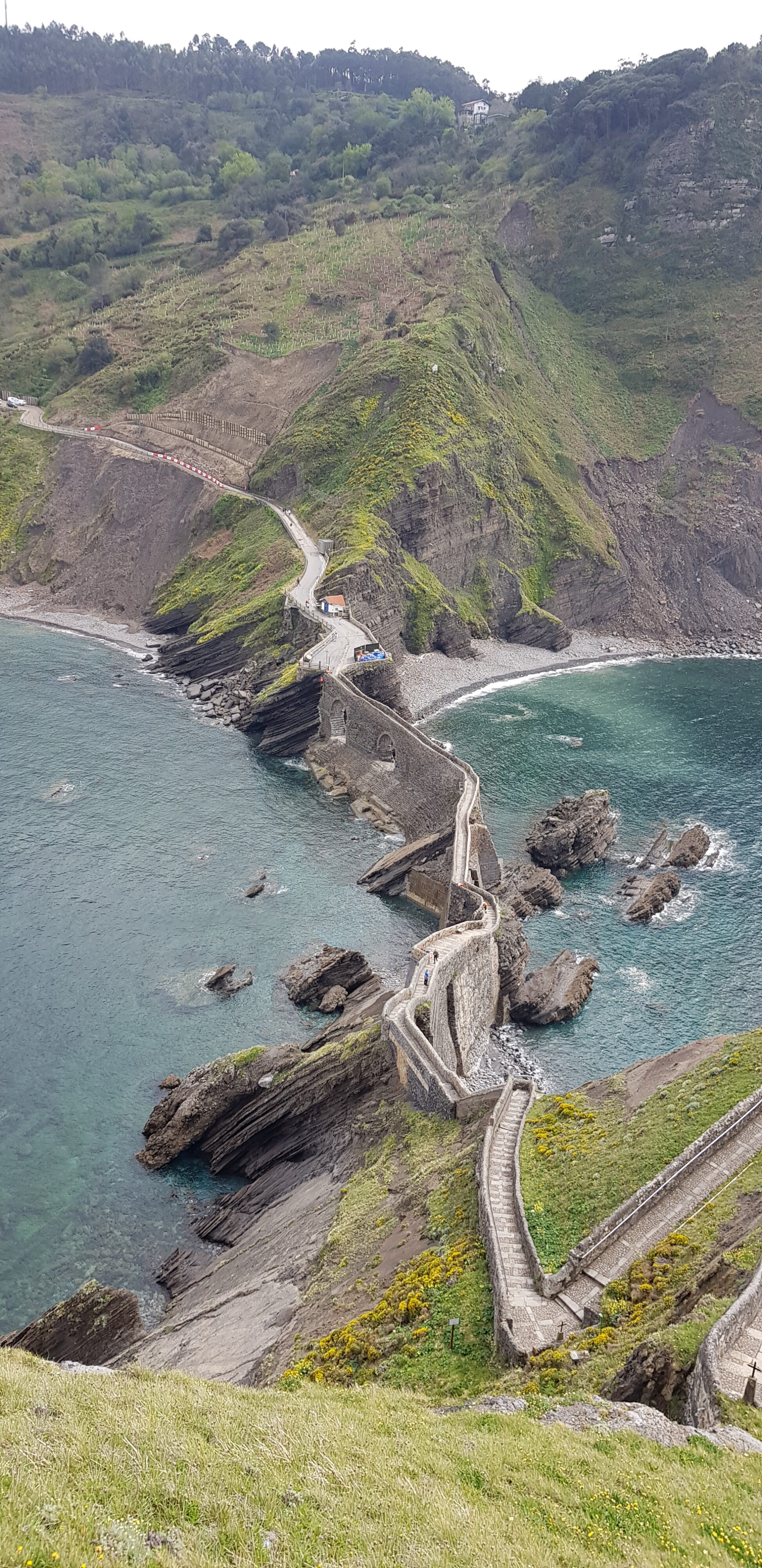

HBO filmed scenes on the islet for the seventh season of its fantasy series Game of Thrones.
Today, Guernica is a lively town with pleasant squares and parks. It is famous for Picasso’s painting depicting its destruction in the 1937 bombing during the Civil War. The town was completely destroyed; only the oak tree remained, beneath which townspeople traditionally gathered to decide on important matters.
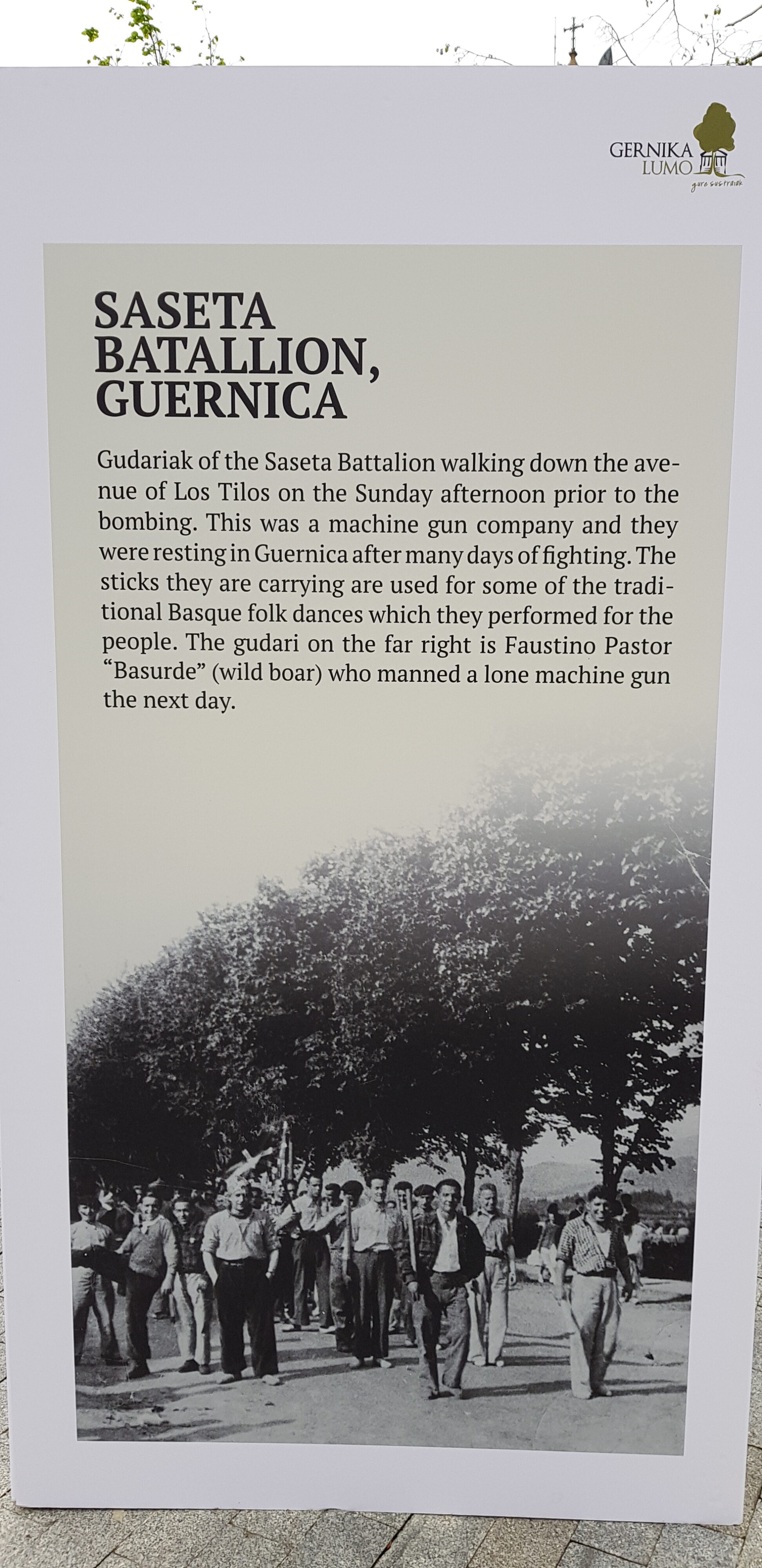
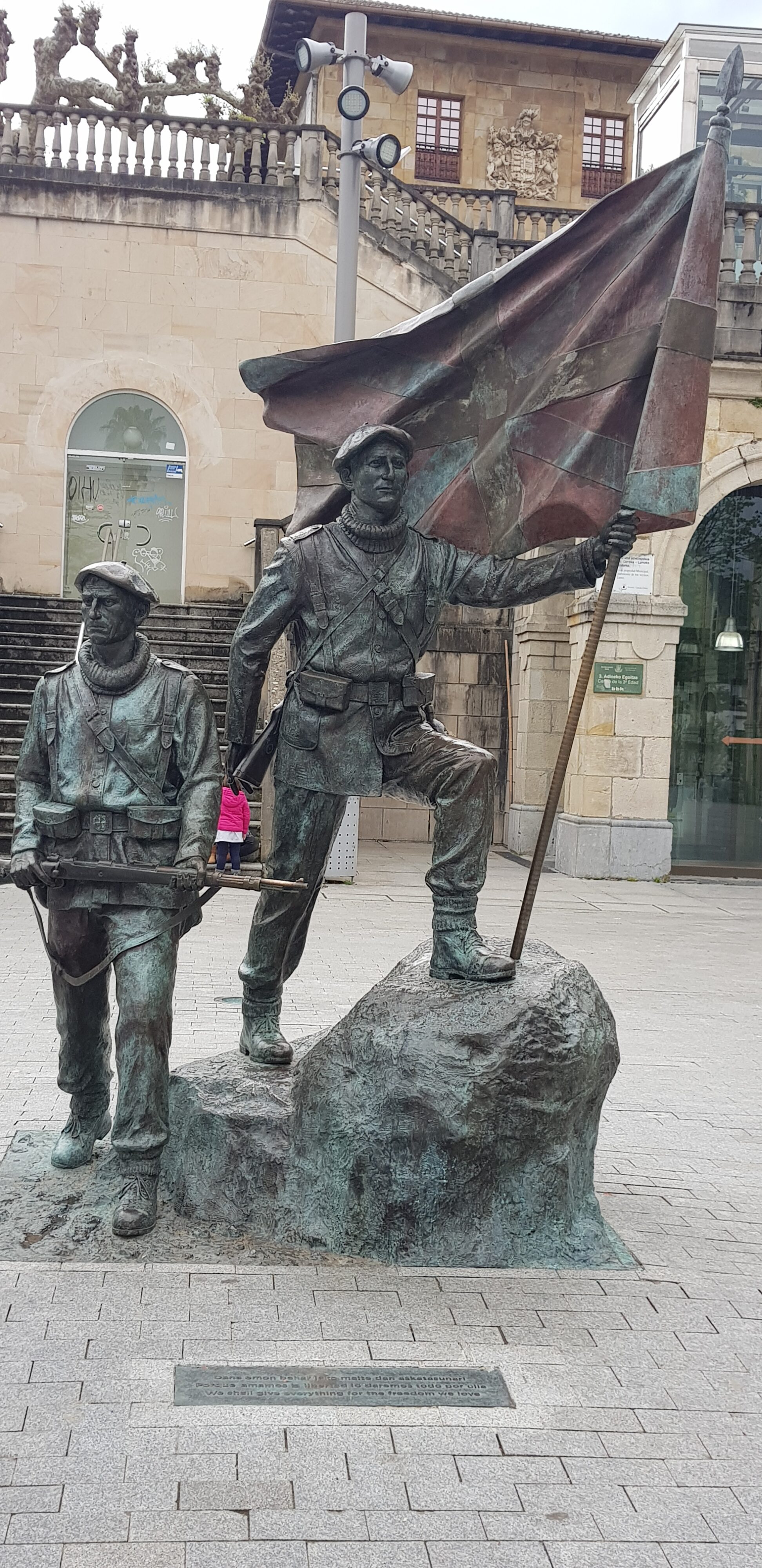
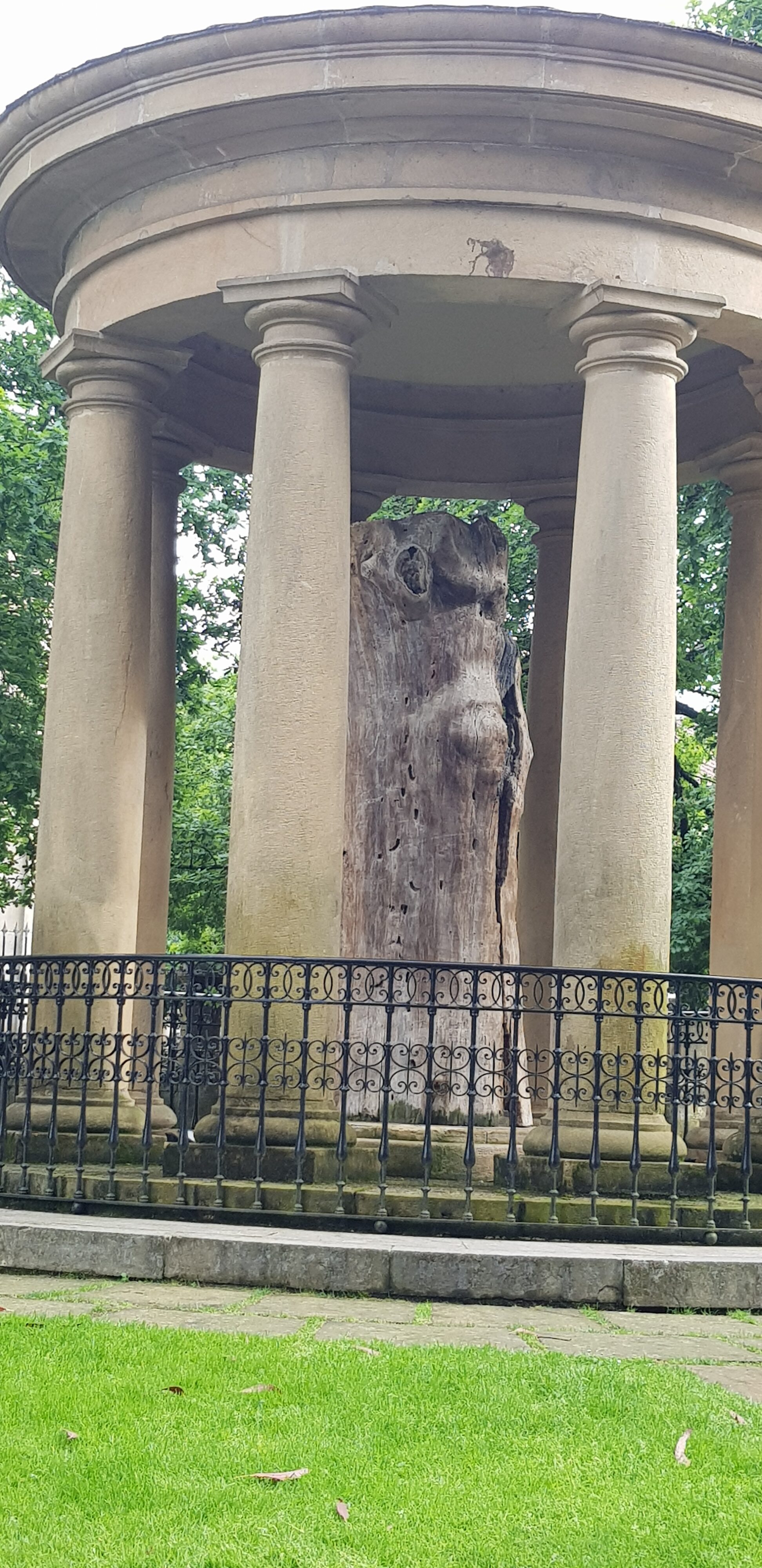

Gernikako Arbola (in Basque, “the Tree of Gernika”) is an oak symbolizing the traditional freedoms of the people of Biscay and, by extension, the Basque people as a whole.
Guggenheim Museum
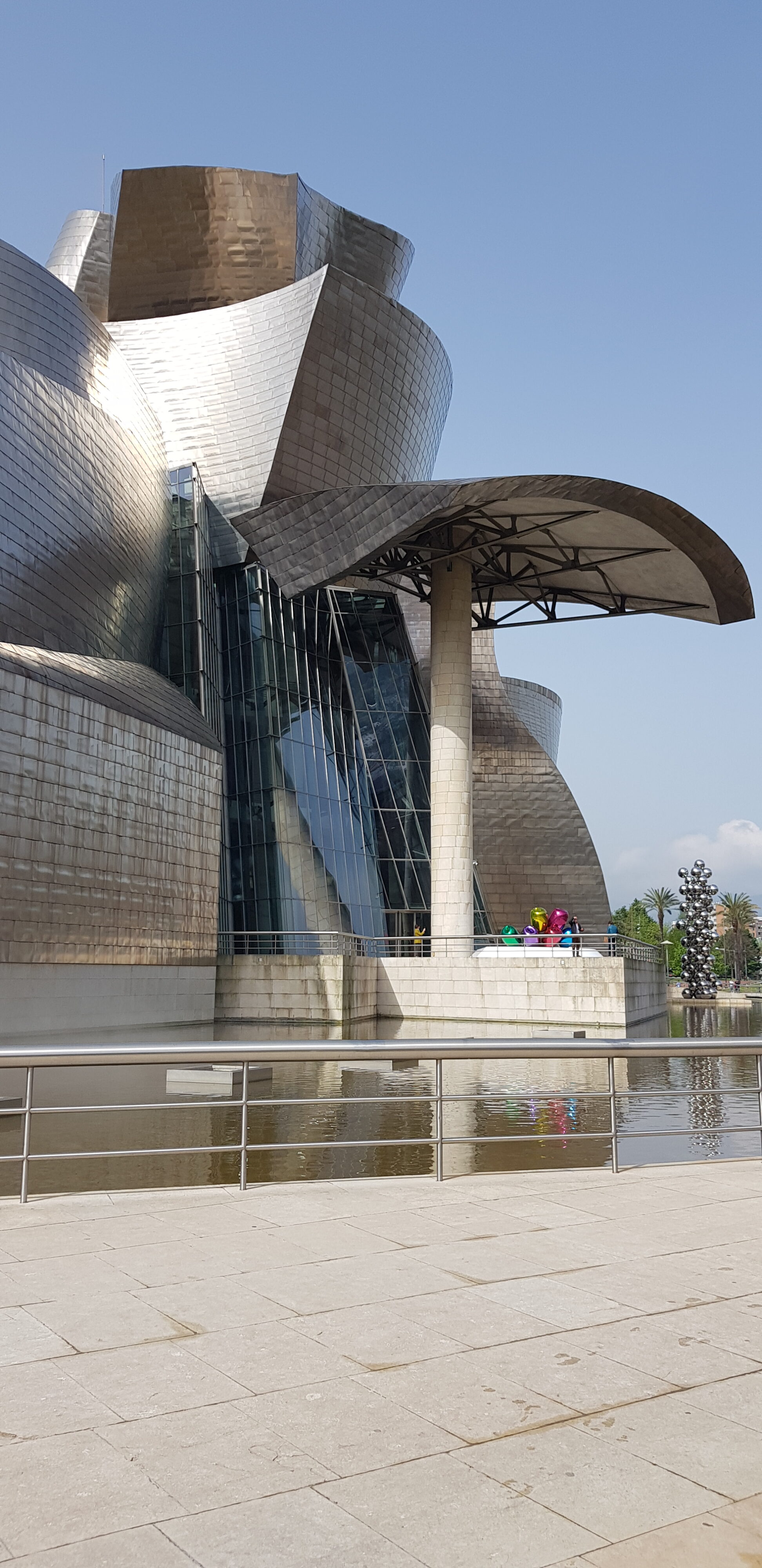
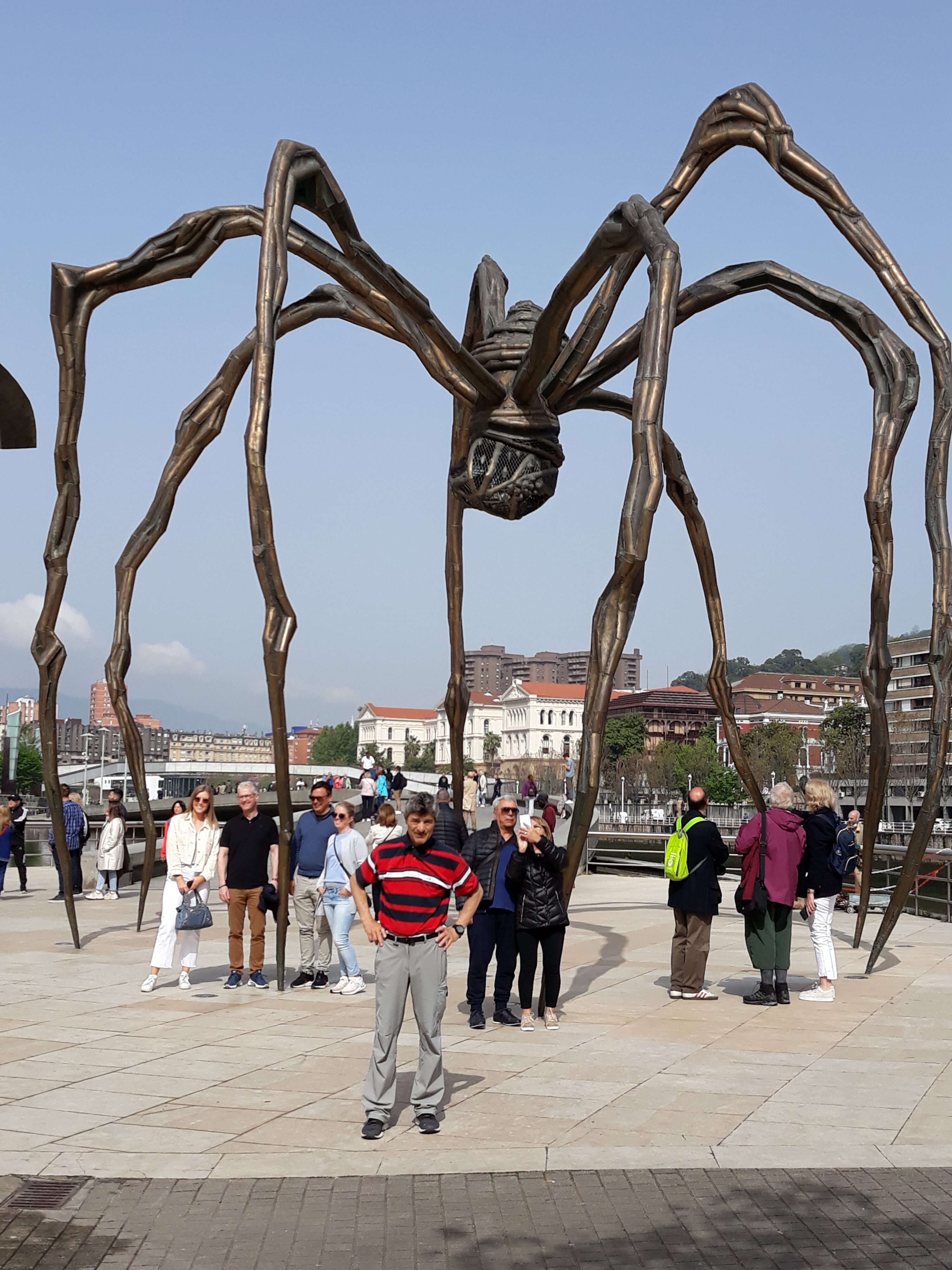
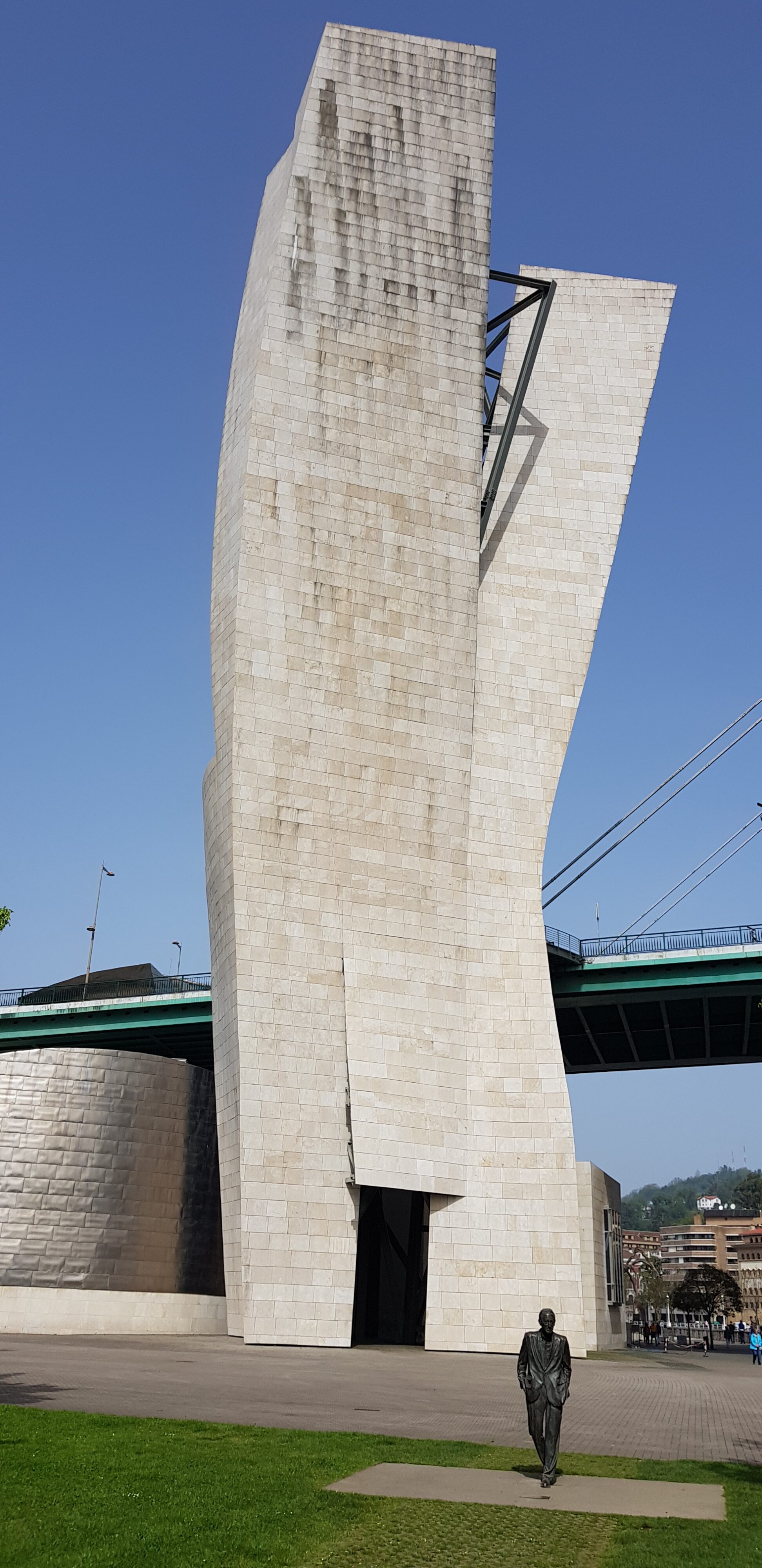
It is a museum of modern and contemporary art designed by Canadian-American architect Frank Gehry, located in Bilbao in the Basque Country, Spain. Benjamin Guggenheim (October 26, 1865 – April 15, 1912) was an American businessman. He died aboard the Titanic when the ship sank in the North Atlantic Ocean.
Altamira
Cueva de Altamira (Altamira Cave) is a cave near Santillana del Mar in Cantabria. Inside the cave, some of the oldest prehistoric cave paintings of animals were discovered, including bison, wild boar, and horses, along with human handprints and hand outlines. The current museum features a replica of the cave, as the original is closed to visitors.

Near the museum lies Santillana del Mar, a historic town in Cantabria, Spain. Its many historic buildings attract thousands of tourists every year. As a result, the town is full of restaurants—naturally closed during siesta, which lasts until late afternoon. We found the only one open on the edge of town, run by a Cuban owner who had emigrated to Eastern Europe and then to Spain.


Los Picos de Europa National Park
Our next destination was the mountains of the Peaks of Europe – Picos de Europa. Sailors gave them this name because these were the first peaks they spotted when returning. We stayed in Cangas de Onís, which was the capital of the Kingdom of Asturias (an autonomous province in northwestern Spain) until 774. Once very poor, the town is now known for its rich heritage, natural surroundings, and gastronomy. Especially famous are sweet or spicy sausages (chorizos) made from pork, venison, beef, horse, goat, and wild boar.

Cangas de Onís is the main starting point for visiting the parish of Covadonga, located at the foot of Picos de Europa National Park in a valley shaped by the Sella River and its tributary, the Gueña.
Covadonga
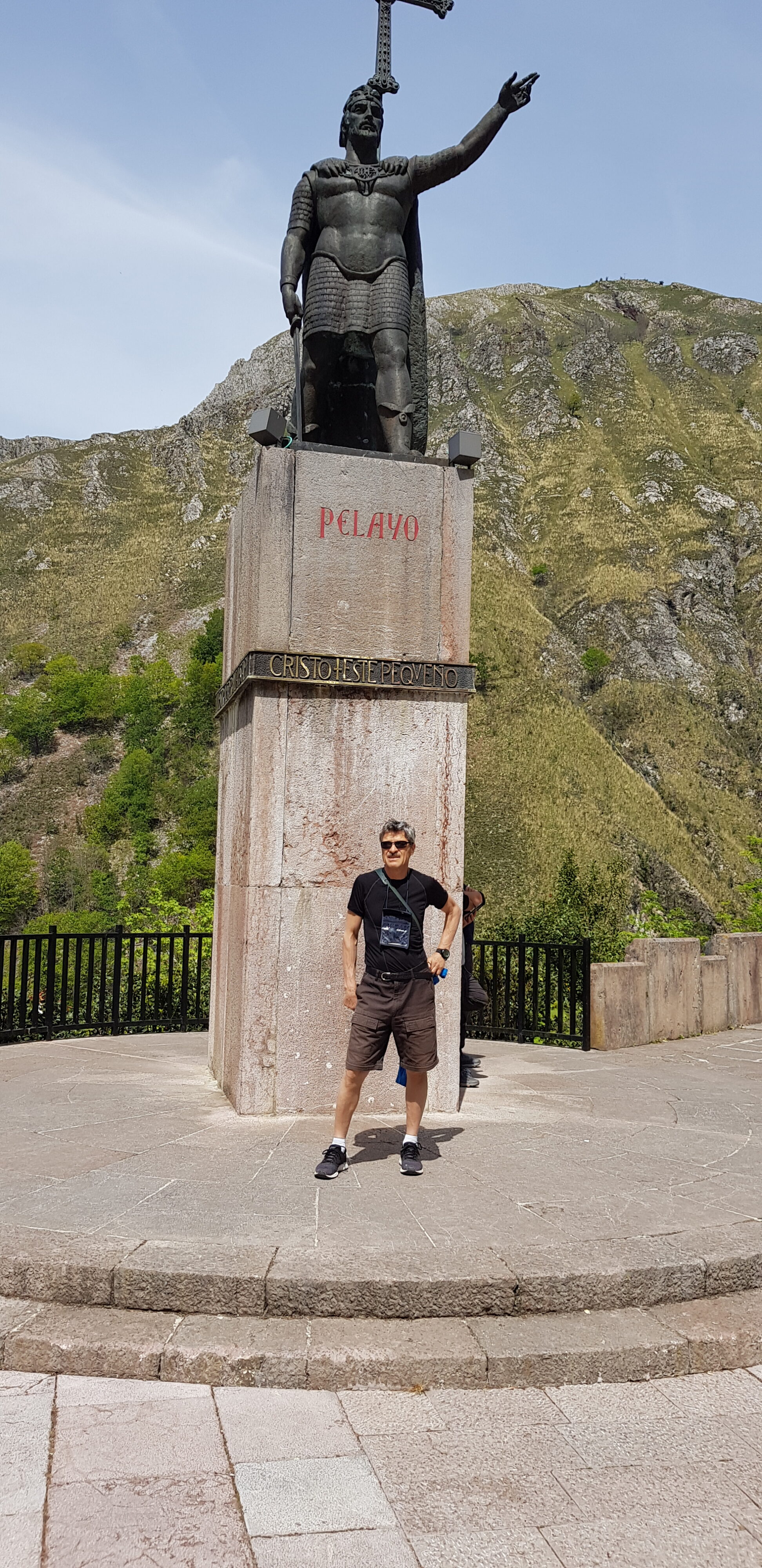
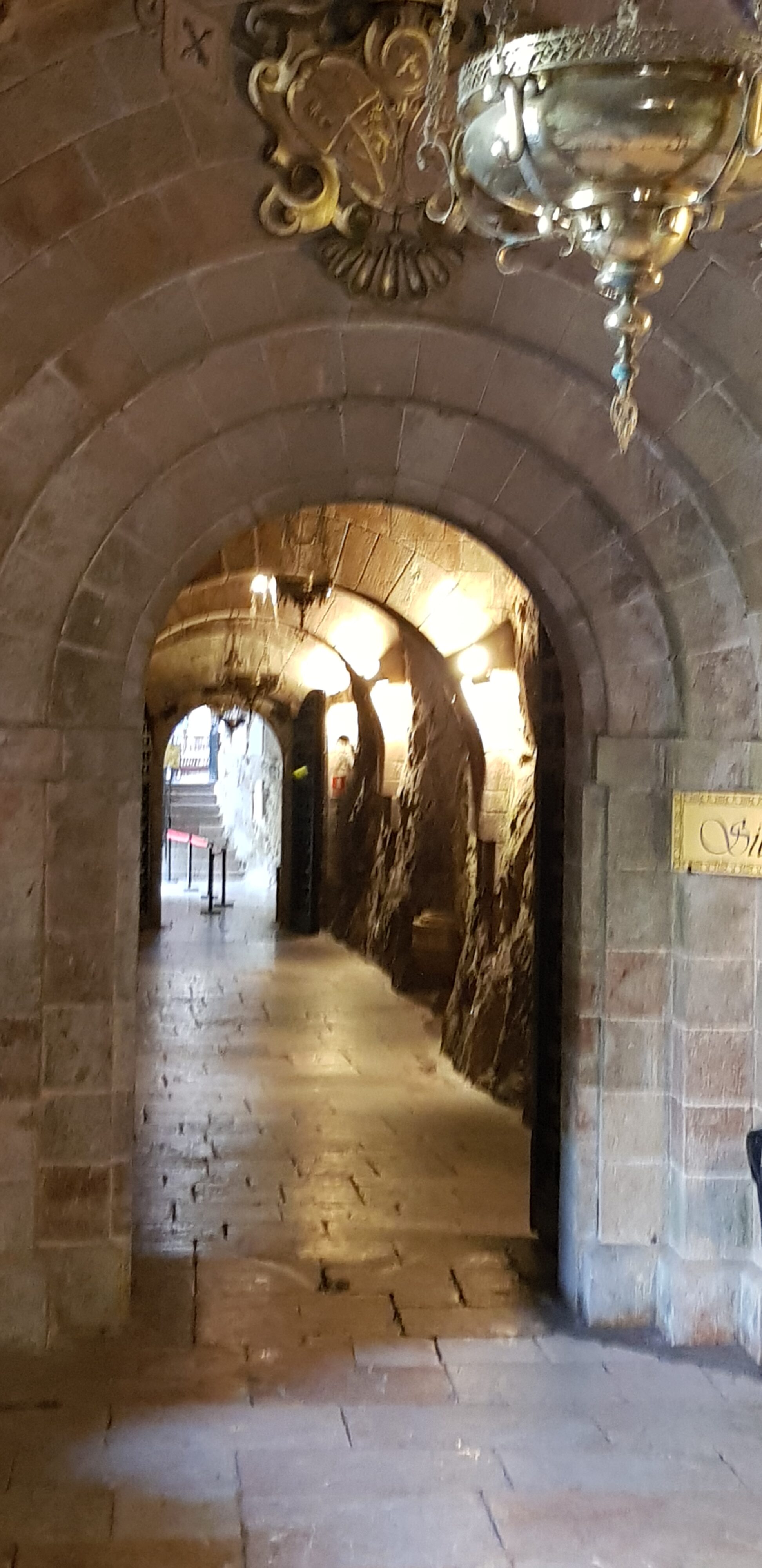
Amid densely forested hills, a grand 19th-century basilica suddenly appears on the site where, in 718, the warrior Pelayo, leader of Visigothic nobles, defeated the Moors and halted their advance into Asturias. Right next to it is a chapel carved into solid rock, where the famous warrior is buried. A path through a stone tunnel leads to the chapel. Viewed from the outside, the chapel is very picturesque, sitting above a water spring.

The Battle of Covadonga around 722 was the first Christian victory on the Iberian Peninsula over the Arabs who had invaded from North Africa. Eight more centuries followed before Muslims were expelled from the Iberian Peninsula. Covadonga is a well-known pilgrimage site dedicated to Our Lady of Covadonga (La Virgen de Covadonga – Virxe de Cuadonga in Asturian).

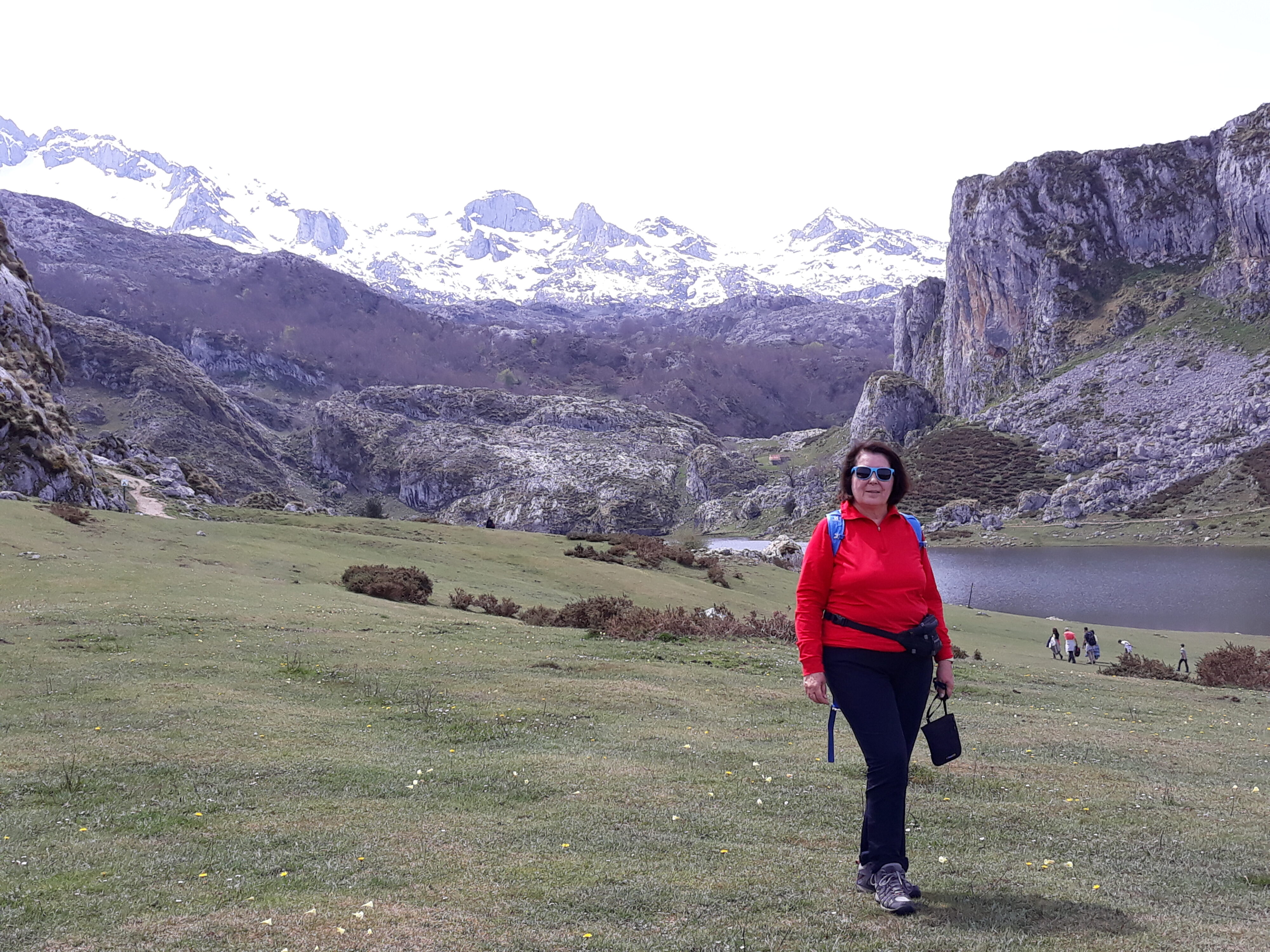
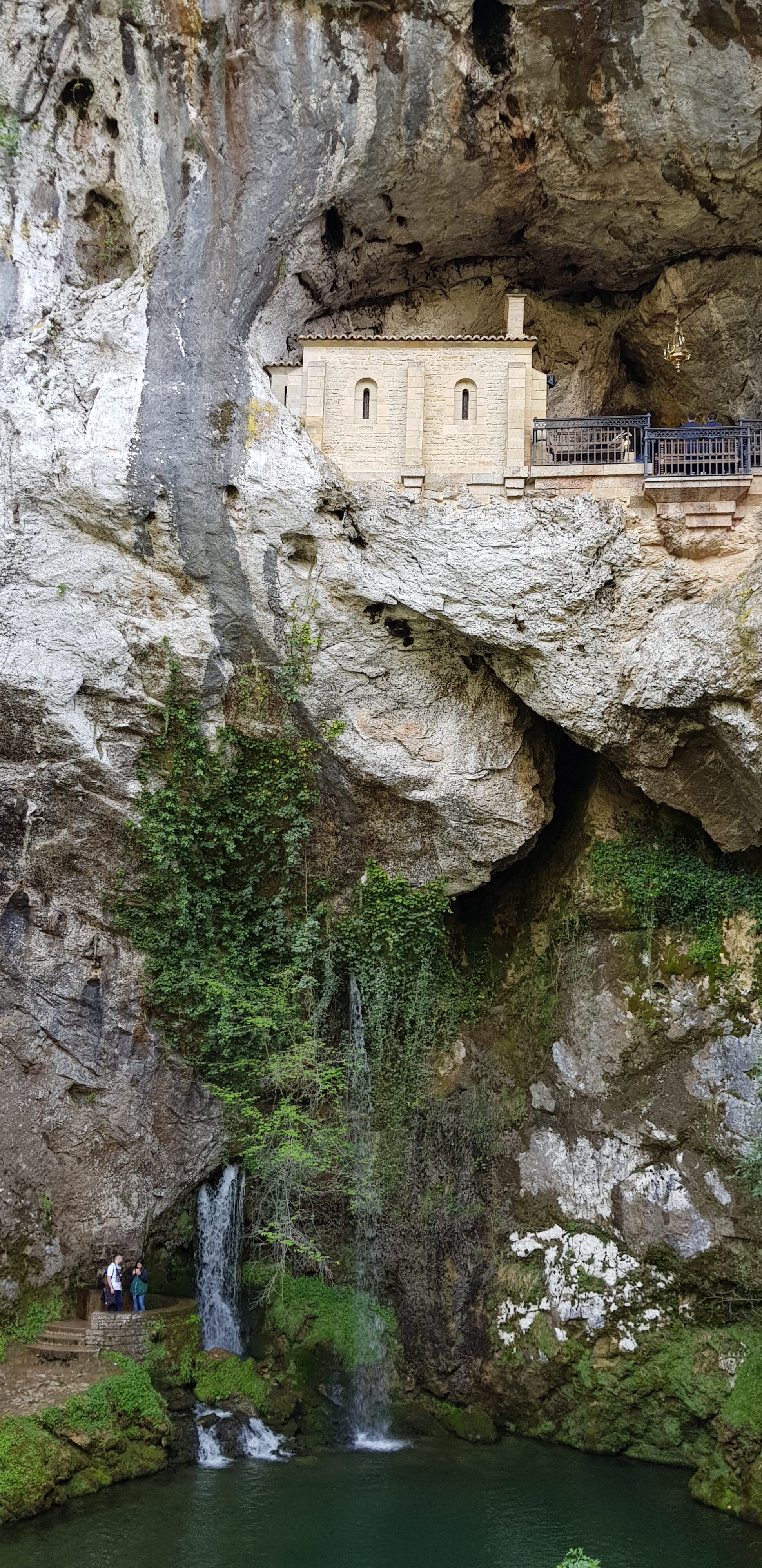
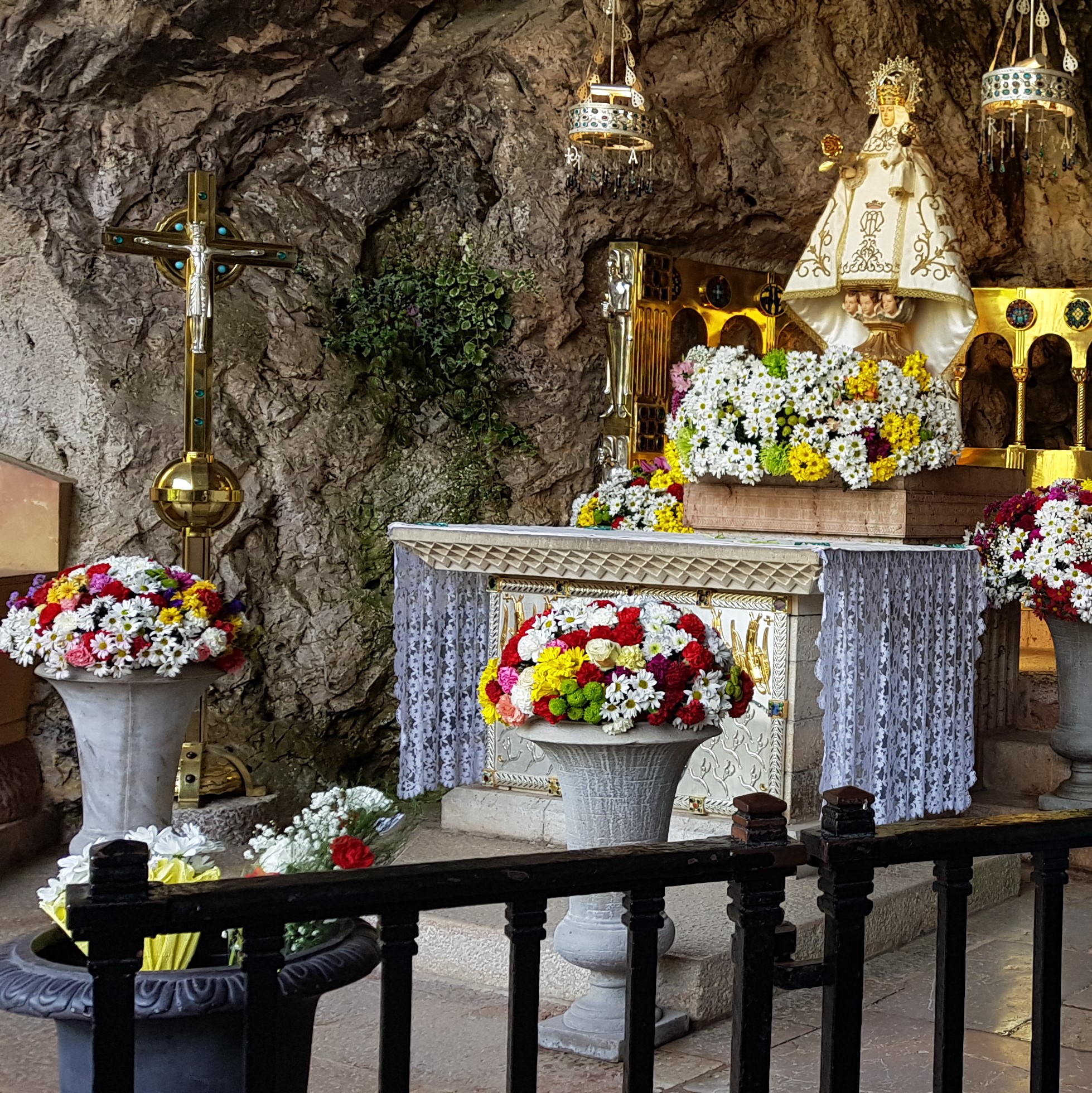
From Covadonga, a mountain road leads toward the mountain lakes Ercina and Enol. The road is closed to private cars, which we leave in the parking lot. Beyond that, a shuttle bus (€9/person) runs up the steep, winding road. It brings us to a pasture plateau with wonderful views of snow-capped peaks and the glacial lakes Ercina and Enol. Upon arrival, we are impressed by how well-maintained and organized the national park is. At the bus stop, a park staff member greets us and, using a map, explains and points out the mountain trails—in Spanish only.
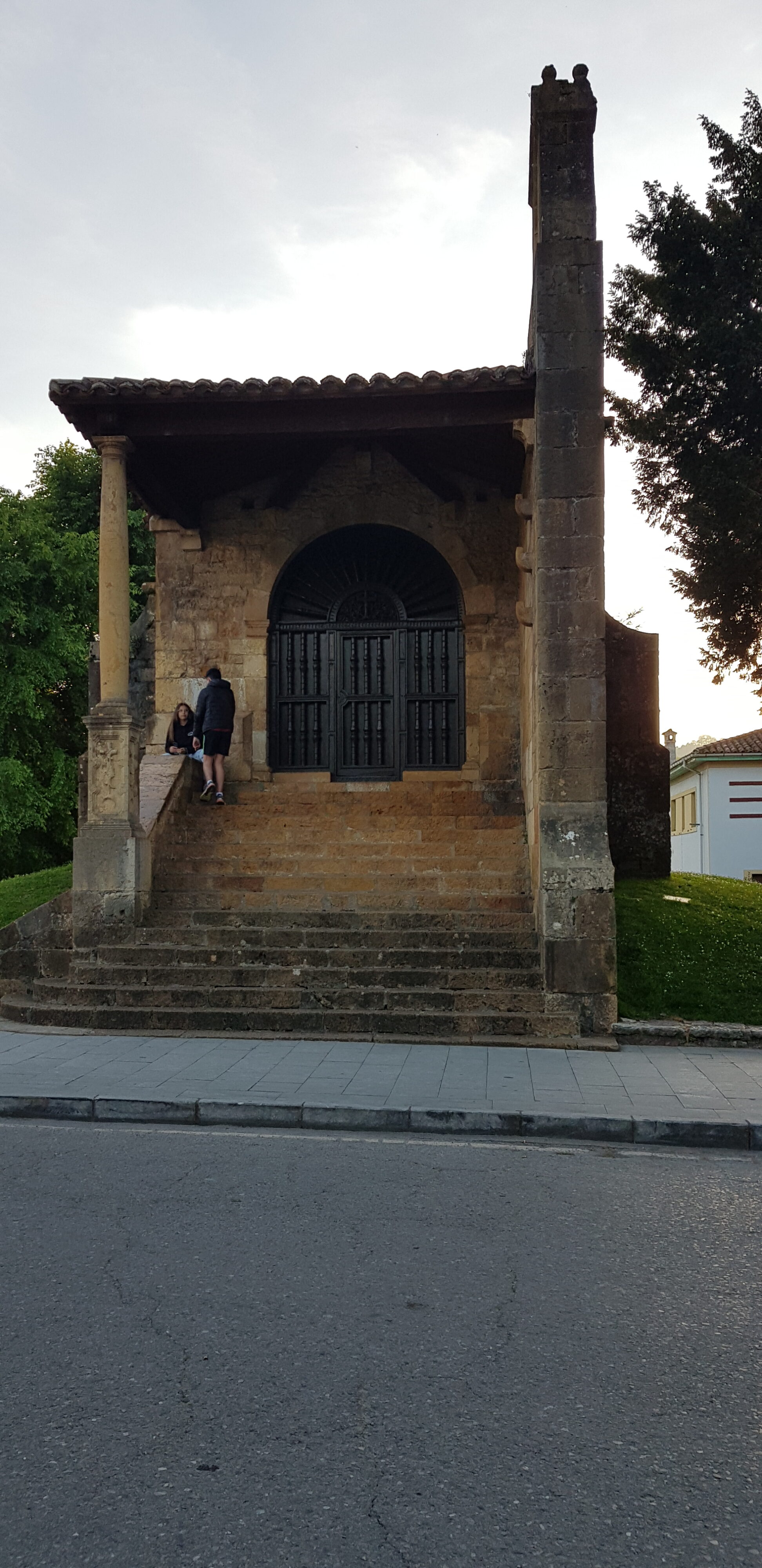
Other sights worth visiting in Cangas de Onís include: the Roman bridge, the famous pedestrian arch bridge, a dolmen, and the Church of the Holy Cross.
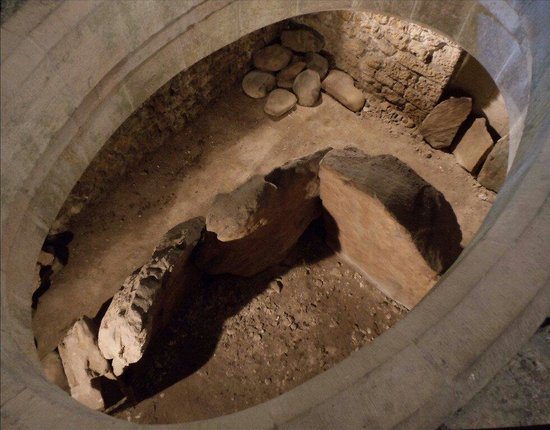
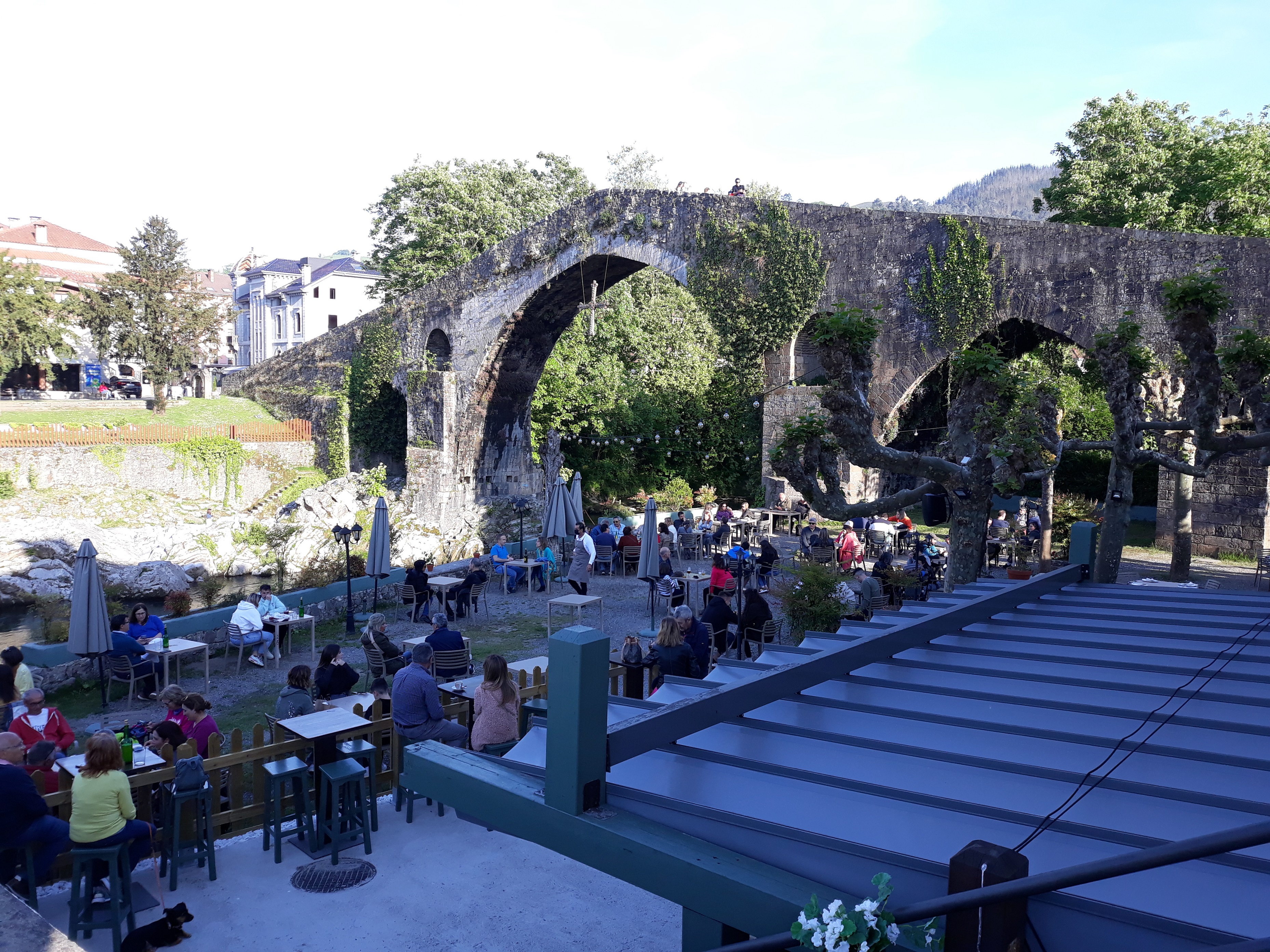
Continued in Part 2: Northern Spain – Part 2

As an Amazon Associate I earn from qualifying purchases.