After exploring the coastal charm of Málaga, the dramatic karst landscapes of El Torcal, and the Moorish splendor of Granada, our Andalusian road trip continued northwest into the heart of Spain’s Islamic and Renaissance heritage. In this second part of our journey, we visit the enchanting flower-filled courtyards and famous Mosque-Cathedral of Córdoba, stop at a fairytale castle along the way, and dive into the vibrant streets, tapas, and grand palaces of Seville.
Córdoba
Córdoba is a small and manageable city. We booked the Abetos del Maestre Escuela hotel on the outskirts of town. This 4-star hotel is quite far from the center of Córdoba, but it offers its own free shuttle service into the city. Plus, it was one of the more affordable options: a room with a terrace, a lovely garden with 2 swimming pools, €50/night for 2 people, and free parking.
We explored Córdoba on a “Free Monumental Tour” lasting 2 hours and 30 minutes. Starting from Plaza de las Tendillas, the city’s main central square, we walked past the Roman Theatre and Plaza de la Corredera,
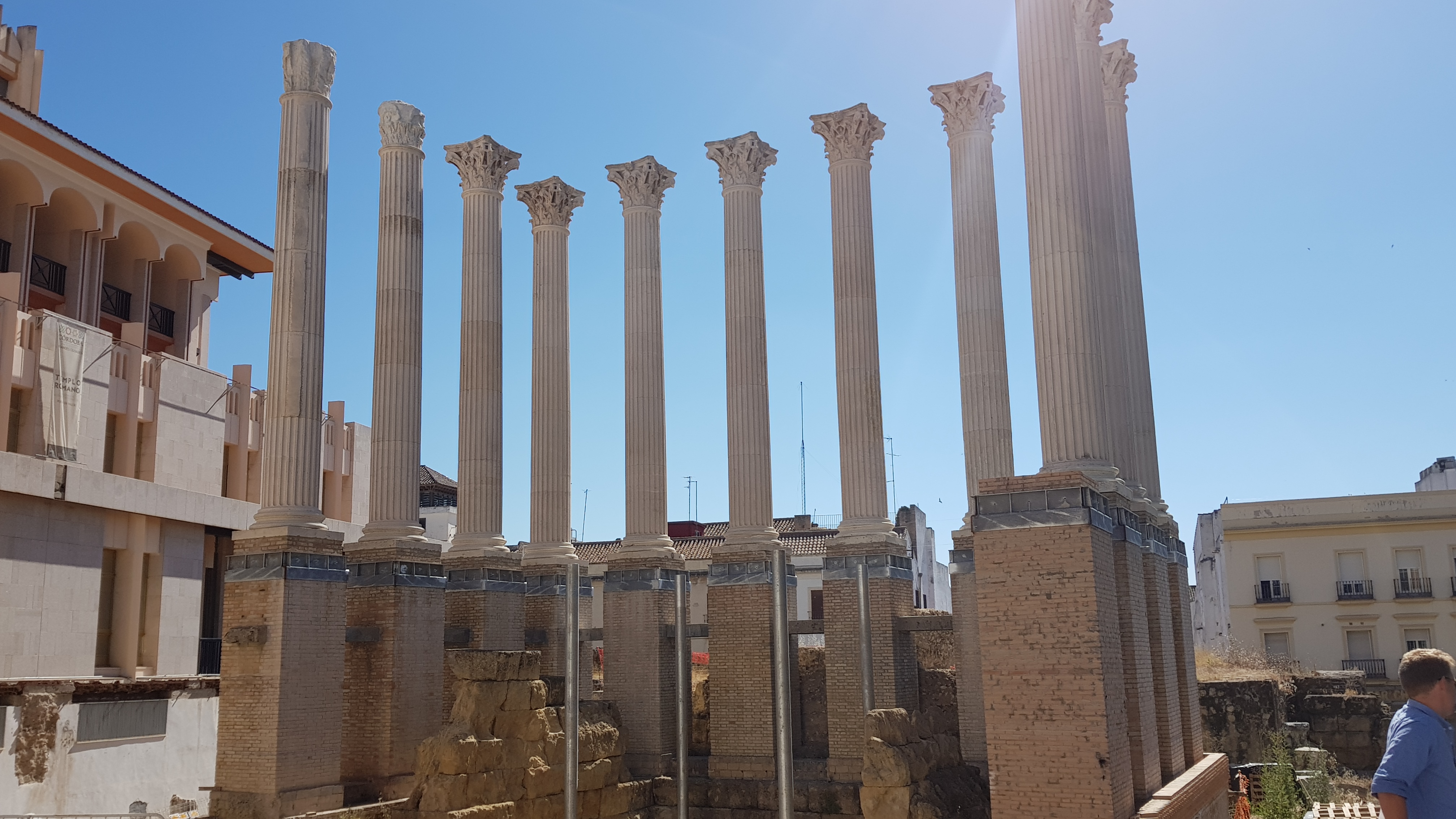
to Plaza del Potro, not far from the banks of the Guadalquivir River. Right on the square stands Posada del Potro, a former inn mentioned by Miguel de Cervantes in Don Quixote.
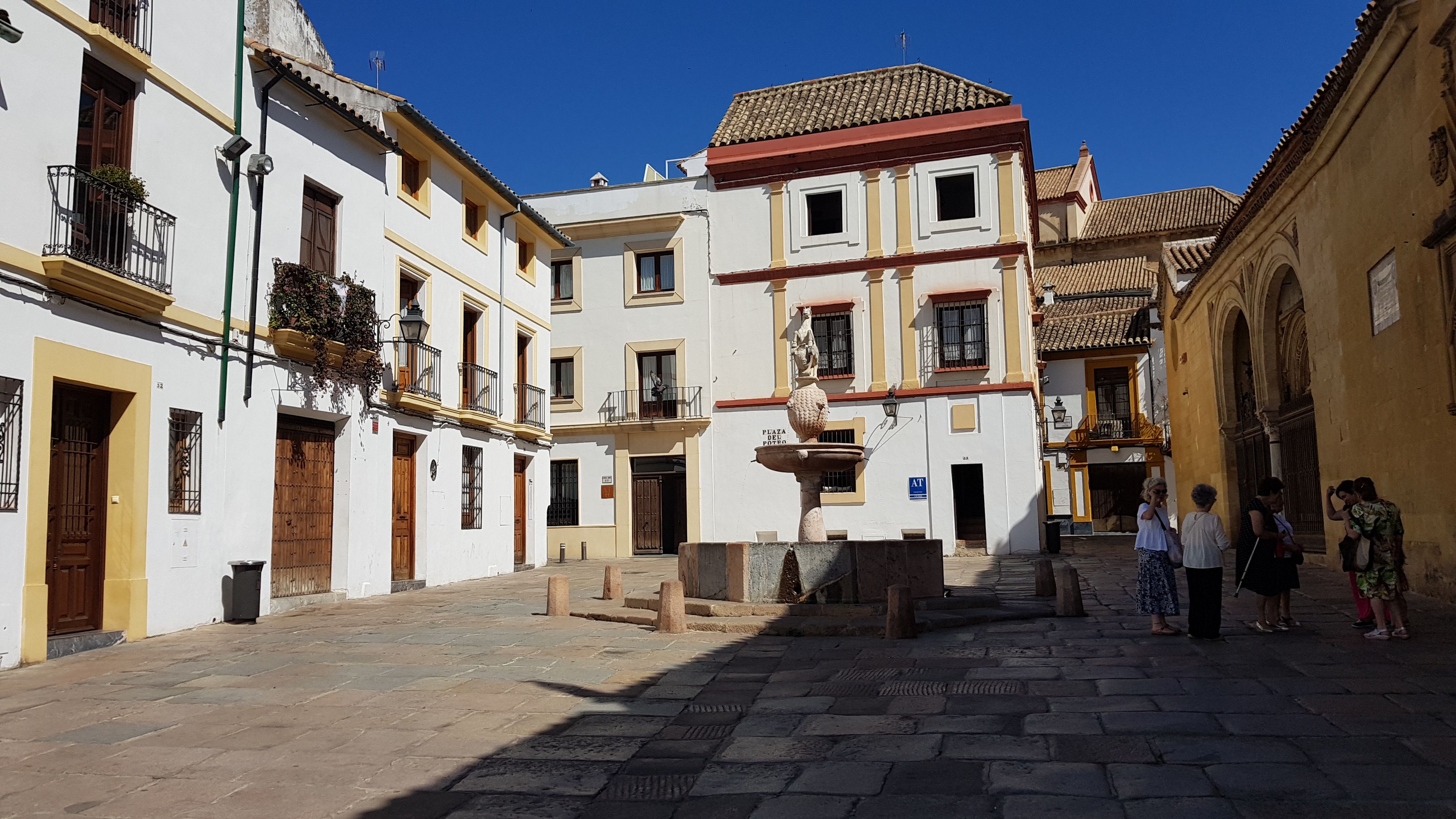
After visiting the cathedral courtyard, we walked down Calleja Salmorejo, which features a plaque with the recipe for Córdoba’s signature dish: salmorejo. Gazpacho and salmorejo have a few things in common—both are tomato-based soups served cold. However, while gazpacho is a thinner soup packed with various vegetables, salmorejo is a richer, creamier soup made with much more bread and olive oil, topped with hard-boiled egg and cured ham.
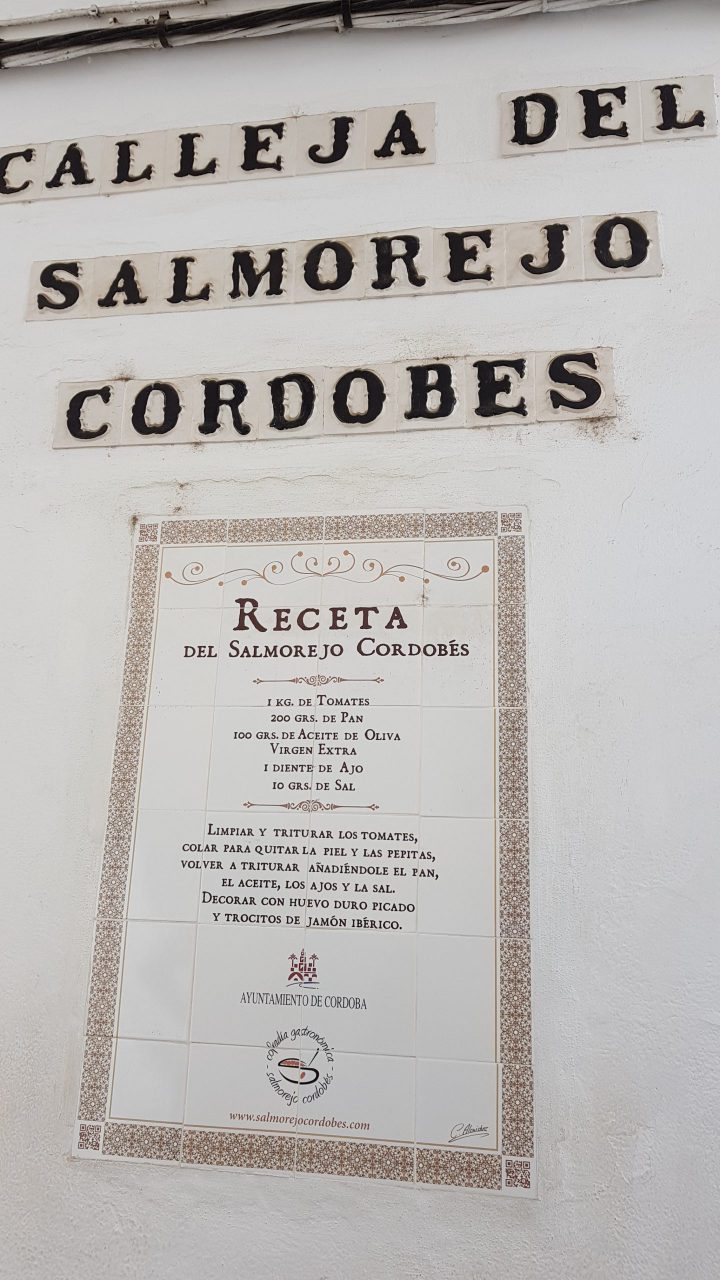
After passing the Bullfighting Museum (Museo Municipal de Arte Taurino), we headed to the monument of Maimonides (Estatua de Maimónides). He was a physician, rabbi, and theologian, later recognized as one of the leading philosophers of his era. The bronze statue’s shoes are polished shiny from the touches of countless visitors—touching them is said to bring wisdom.
A Cathedral of Two Cultures
The Mosque-Cathedral of Córdoba (Mezquita, officially the Cathedral of Our Lady of the Assumption). Following the Arab conquest of the Visigothic* Kingdom, Prince Abd al-Rahman I purchased half of the Church of Saint Vincent in Córdoba and began converting it into a mosque in 784. The mosque was expanded over the following centuries. In 1236, Córdoba was conquered by King Ferdinand III of Castile, who converted the mosque into a Catholic church. Side chapels were added, and the minaret was transformed into a bell tower. Later, in the 16th century, a Christian Renaissance cathedral nave was built right in the center of the building. Converting the mosque into a Catholic church likely saved it from demolition during the darkest period of the Spanish Inquisition. Artists and architects continued adding to the cathedral until the late 18th century.
*The Visigoths (Western Goths) were one of the most important East Germanic tribes that split from the Goths in the 4th century, settled within the Roman Empire, and converted to Christianity. In the 5th century, they established their Visigothic Kingdom on the Iberian Peninsula.
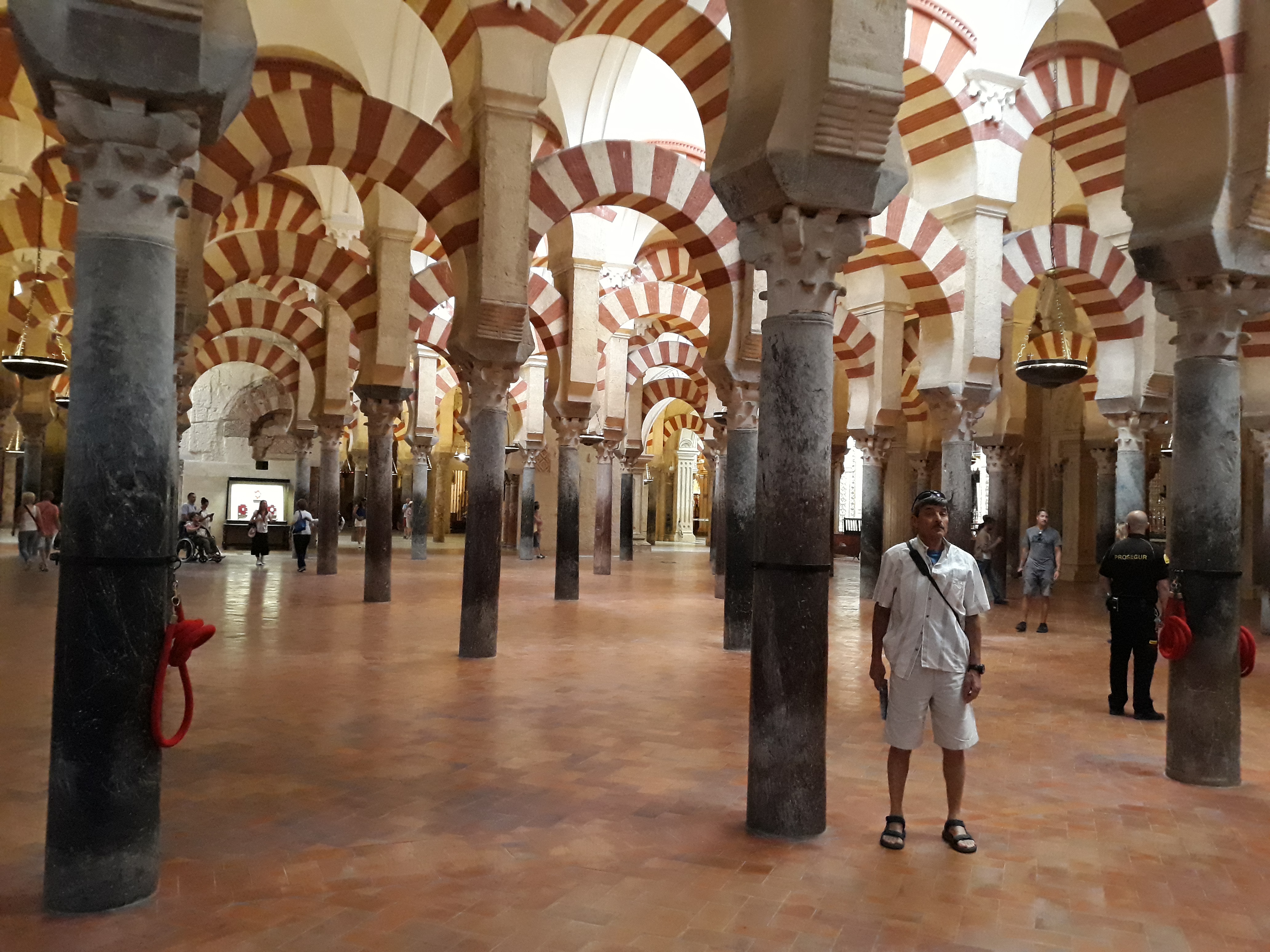
The Mezquita’s most striking architectural feature is its striped horseshoe arches made of jasper, onyx, marble, and granite. Today, the building holds 856 columns and arches (down from the original 1,293), creating what feels like an endless forest of pillars. Inside, you can admire the richly gilded Islamic prayer niche—or mihrab—just steps away from the Gothic-Baroque Christian nave, a combination unique in the world. Gothic, Islamic, Baroque, Renaissance, and Moorish styles all intertwine seamlessly here.
Tip: Climbing the cathedral bell tower costs only €2. You’ll be rewarded with the best panoramic view of Córdoba, with the Patio de los Naranjos (Courtyard of the Oranges) right below—well worth the €2 and a few extra steps.
After the Christian reconquest, the former minaret of the Aljama mosque was converted into a bell tower. Following an earthquake in 1589, a new bell tower was built encasing the original minaret.

Courtyards in Córdoba
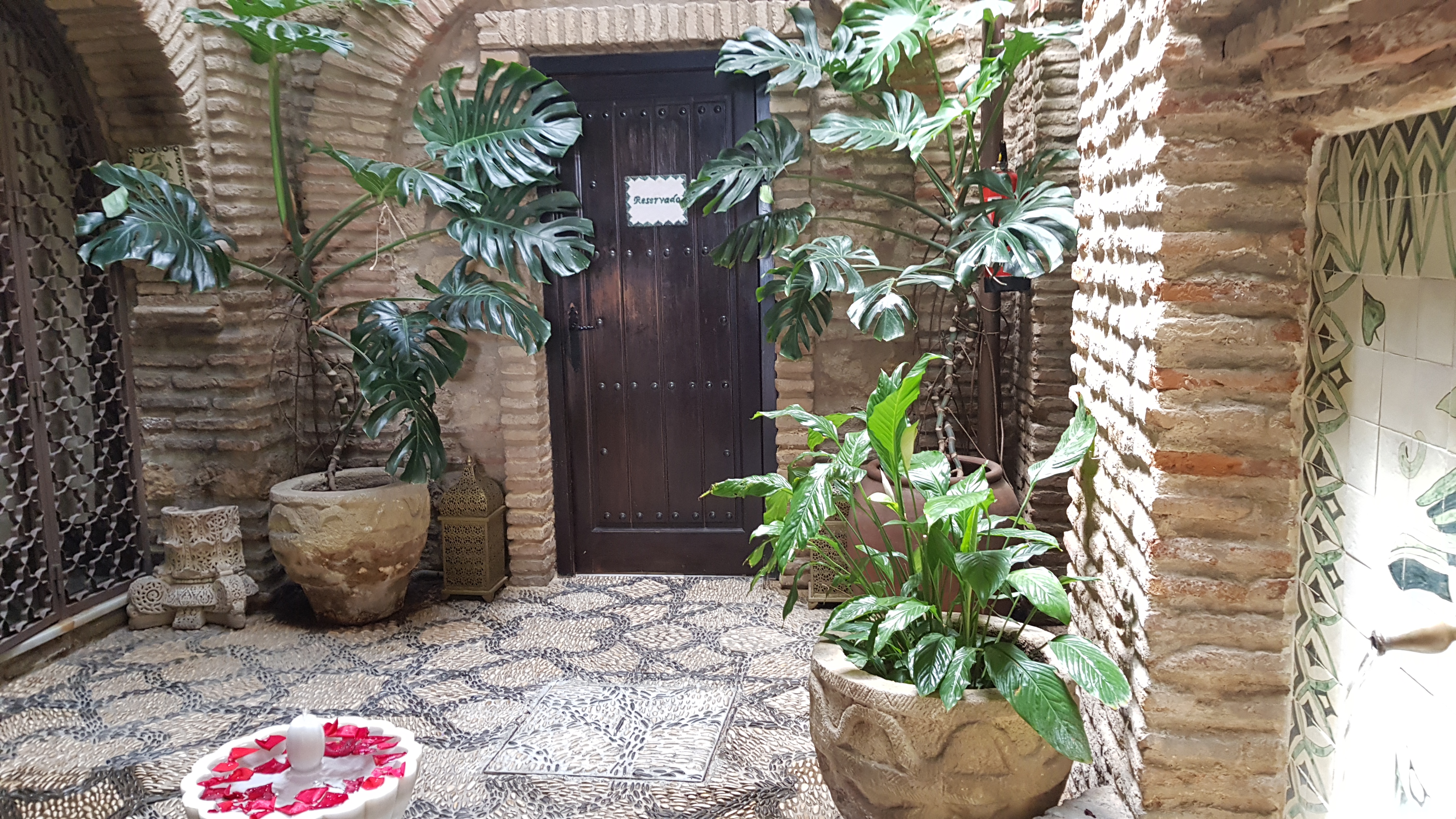
When it comes to courtyards (patios), Córdoba’s are the most famous in all of Spain. In almost every house in the historic center, you will find an inner courtyard or terrace brimming with lush plants and flowers.
Roman Bridge over the Guadalquivir River
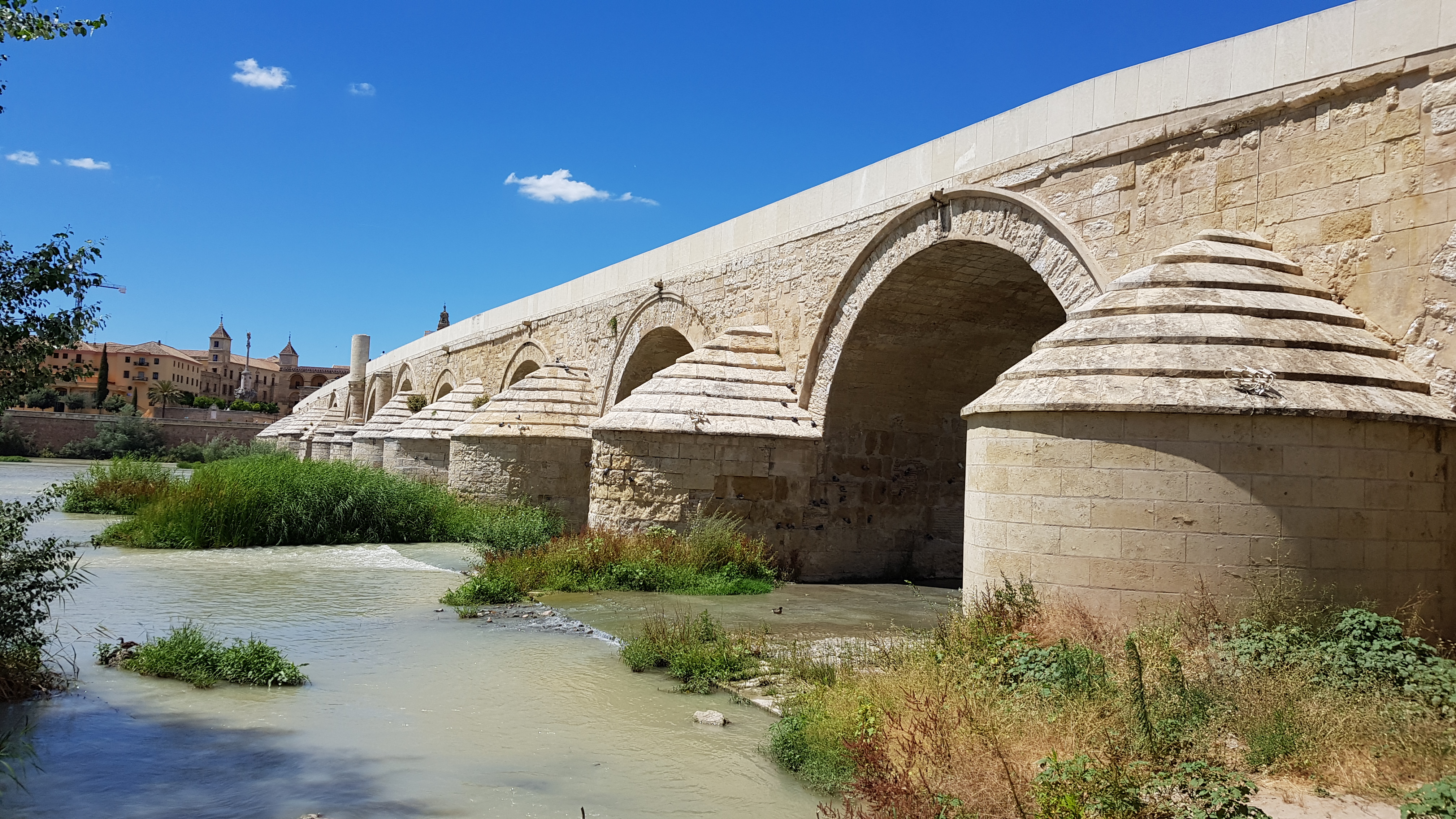
Tip: Walk across the bridge in the late afternoon to capture it bathed in sunset light. From the far bank of the Guadalquivir River, you’ll get a stunning view of the Córdoba skyline.
Crossing the Guadalquivir on the ancient Roman Bridge feels like walking across 2,000 years of history.
Other sights worth visiting in Córdoba: Julio Romero de Torres Museum, Alcázar de los Reyes Cristianos, Palacio de la Merced, and the Calahorra Tower.
Medina Azahara
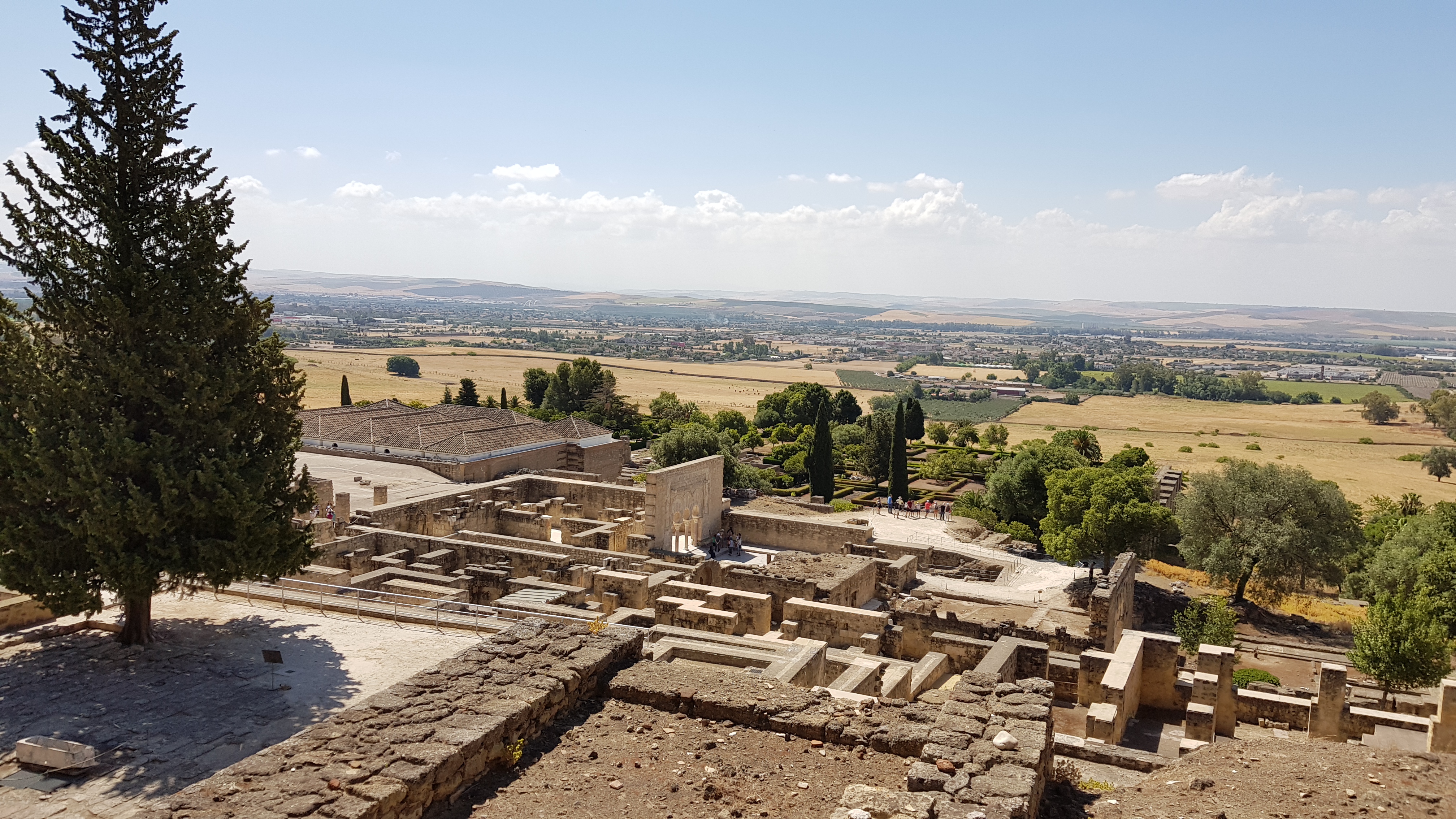
Not far from Córdoba, we visited the ruins of the Medina Azahara palace-city (from the Arabic al-Zahra, meaning “the shining city”). Popular legend has it that Caliph Abd-ar-Rahman III named the city az-Zahra, or Azahara, after his favorite concubine. Built between 936 and 940 after he proclaimed himself Caliph, this dazzling city was meant to showcase his power to the world. It flourished for about 80 years before being tragically destroyed around 1010 during a civil war.
Almodóvar del Río Castle
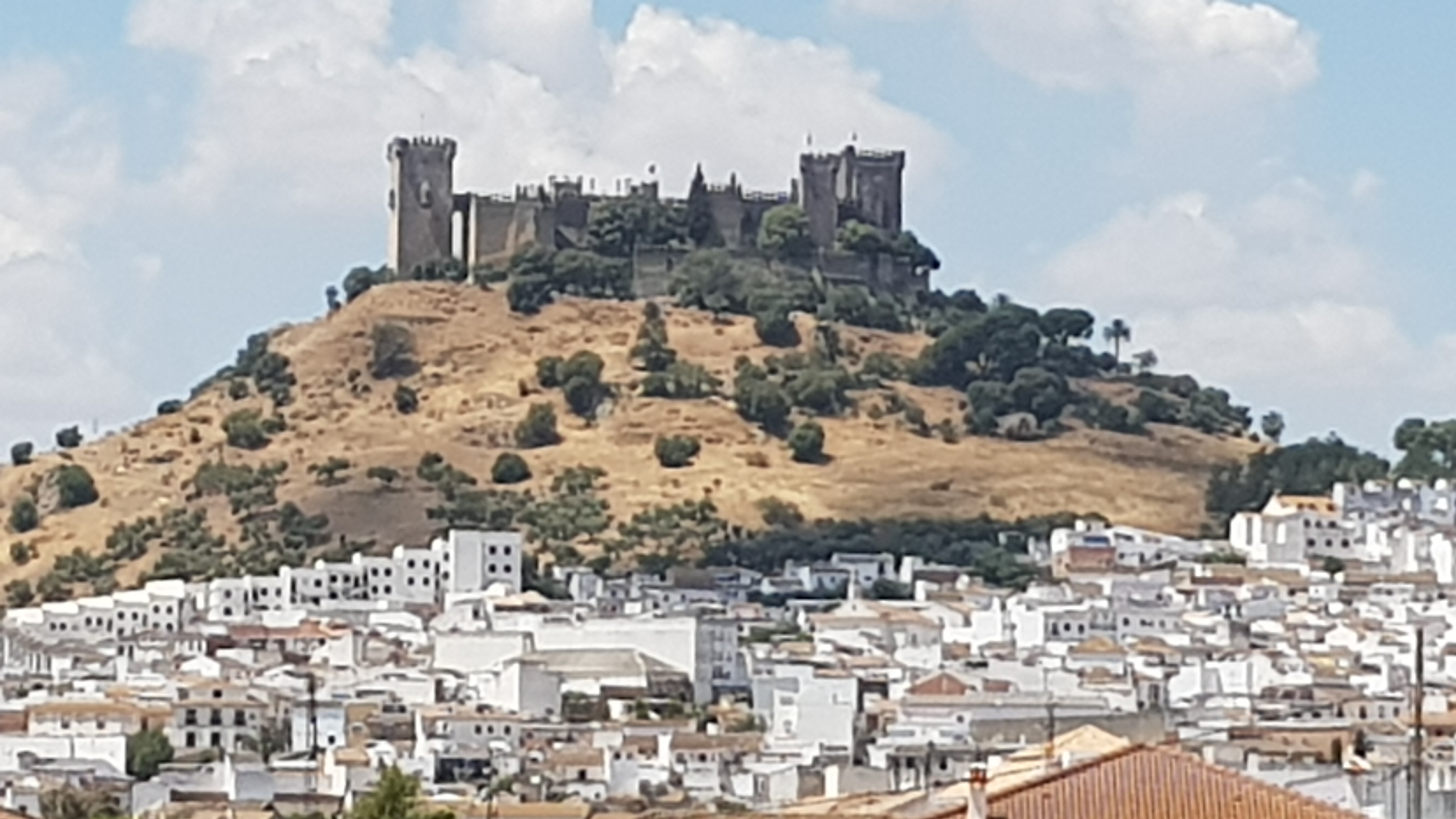
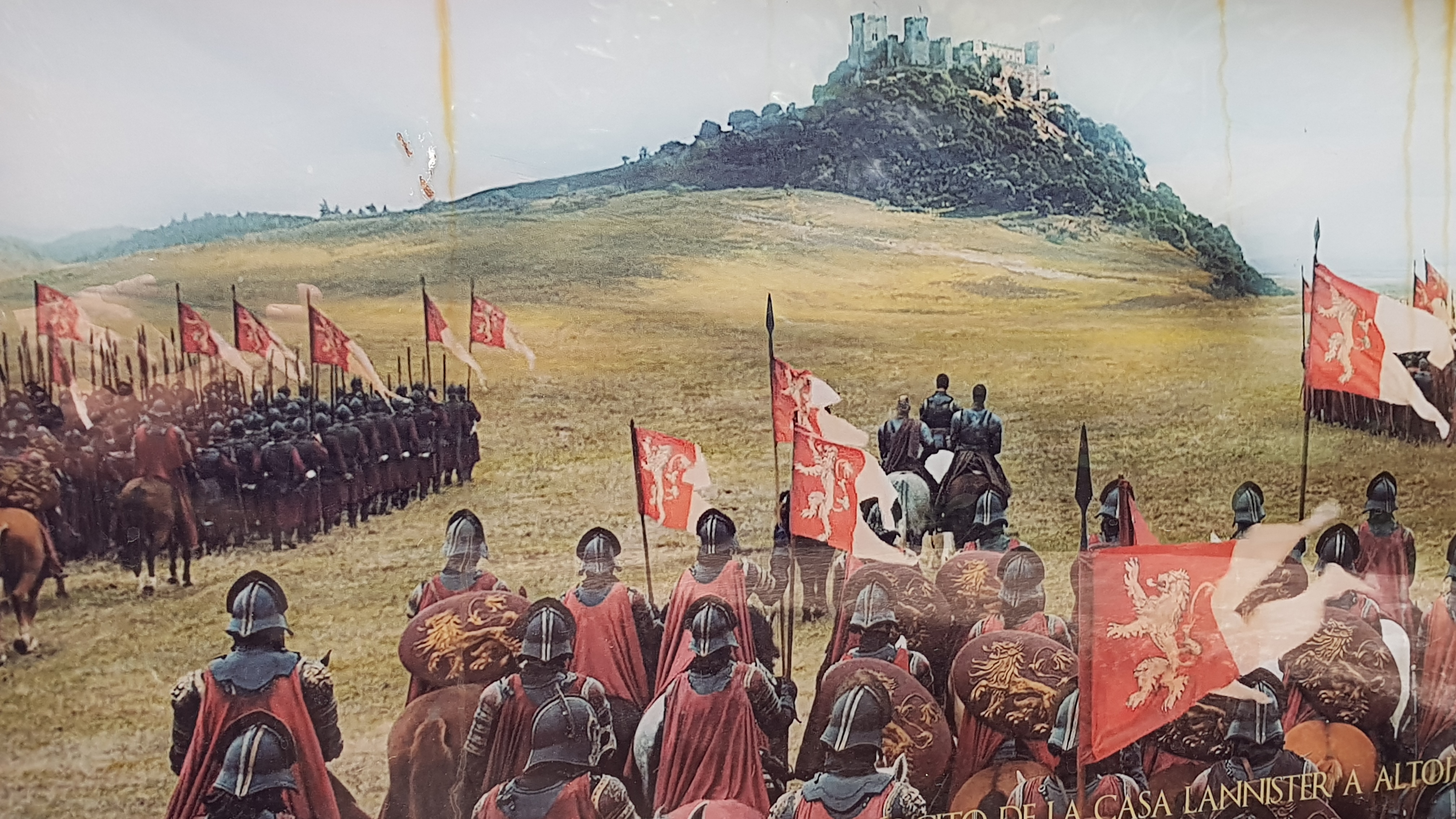
On the way to Seville, you can spot the fairytale-like Almodóvar del Río Castle perched on a hill above the town of the same name from miles away. The castle has been restored and is well worth a visit, blending Muslim and Christian architecture. Built in the 8th century by a Moorish prince, it was conquered by Christians in the 13th century.
Today, the castle is perhaps best known as a filming location for scenes in the TV series Game of Thrones.
Seville
Seville is the beating heart of Andalusia, embodying all of its iconic traditions: bullfighting, flamenco, and tapas. The streets are full of performers—flamenco dancers, acrobats, singers, and more.
Seville is a large city, and finding a hotel, apartment, or hostel in the historic center is easy. We chose a charming budget hotel, El Casa Palacio Don Pedro, featuring a spacious lobby, a small reception desk, and complimentary coffee or tea. The room cost €55/night for 2 people, with discounted parking available in a garage on the next street for around €15/day.
Seville also offers several free walking tours, though we preferred exploring on our own.
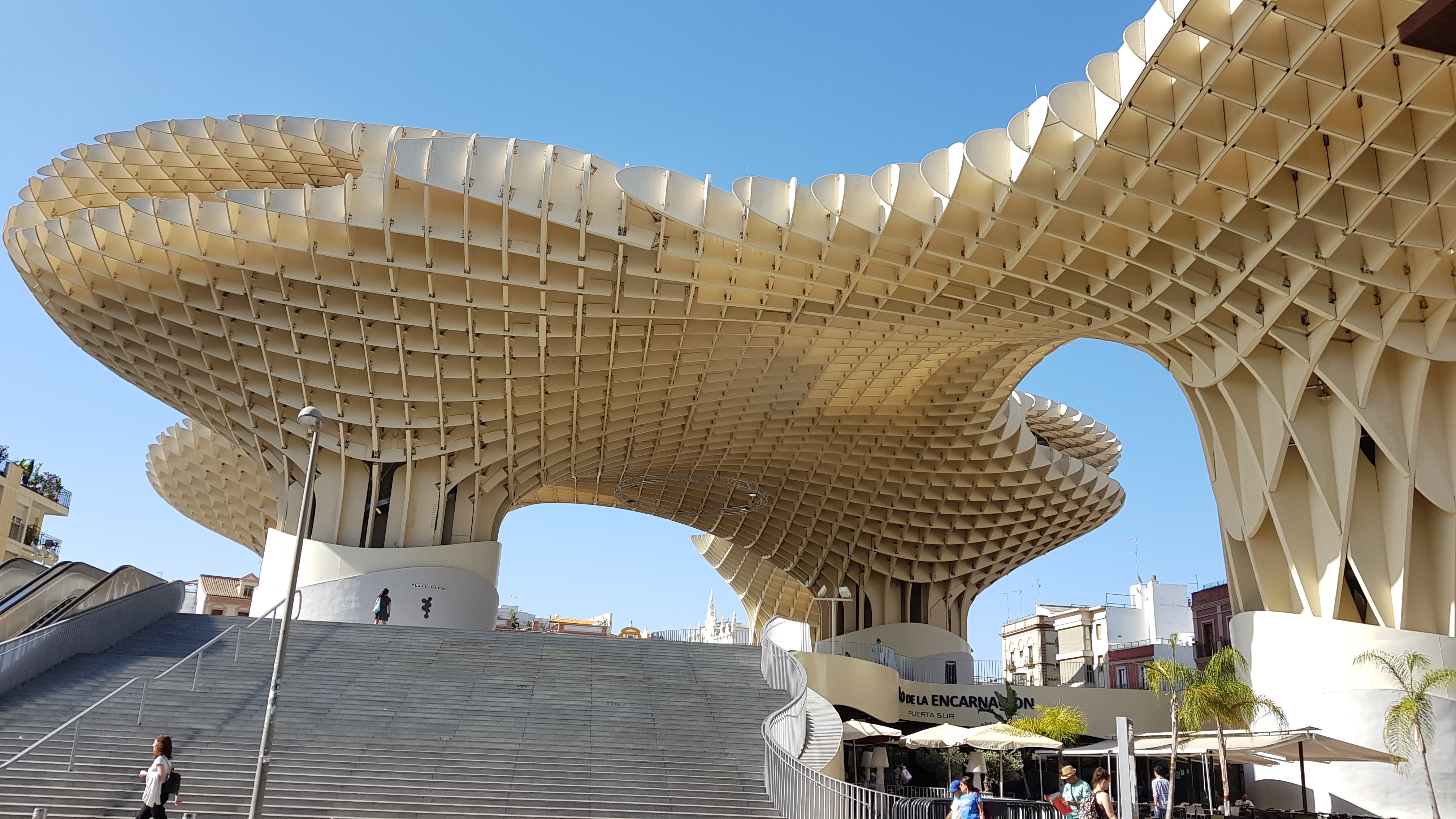
The most famous viewpoint in Seville is Las Setas—”The Mushrooms.”
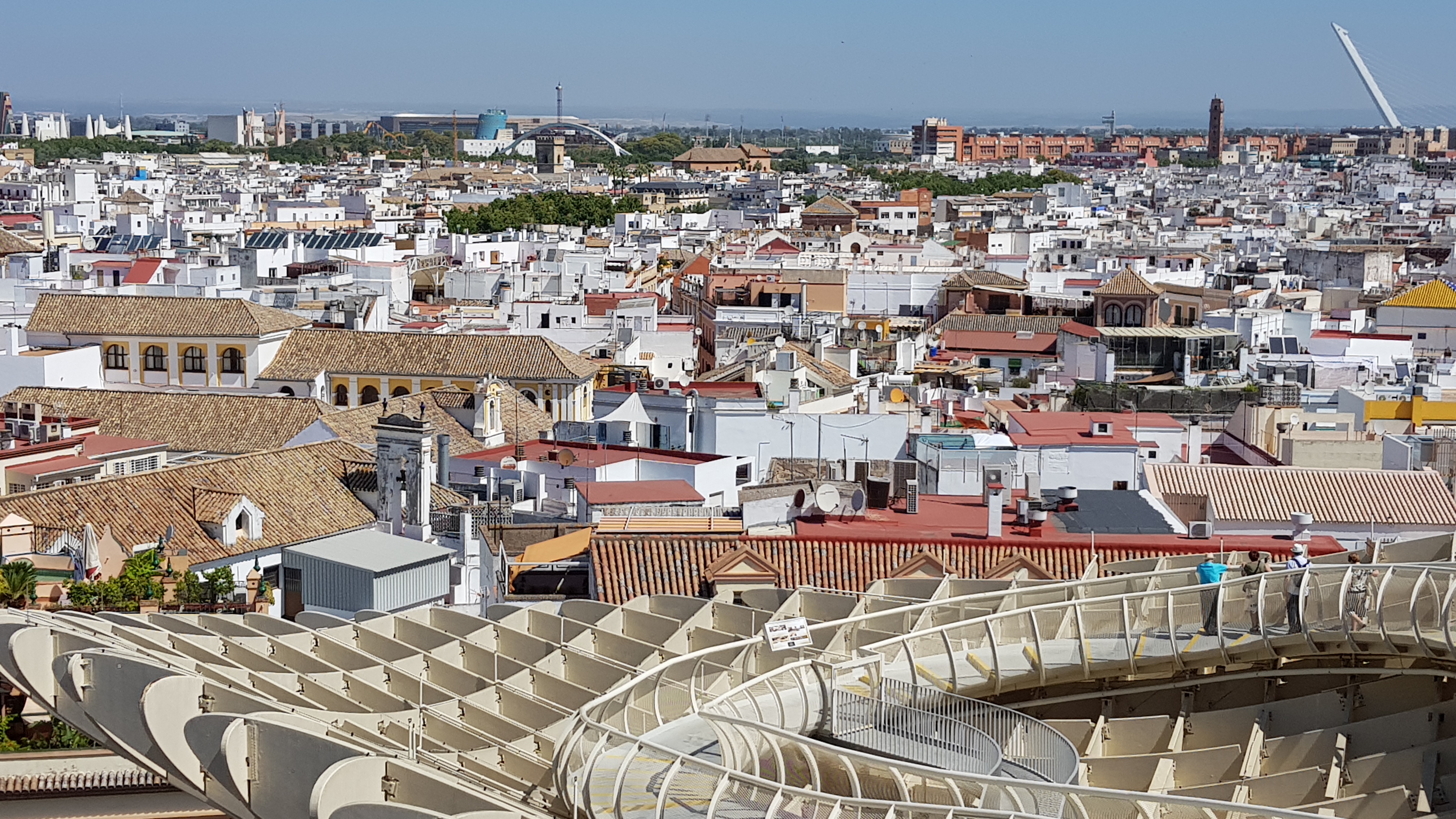
Although its official name is Metropol Parasol, everyone knows this structure as Las Setas. Standing 28 meters tall, it is the largest wooden structure in the world. Admission to the Mirador de las Setas viewpoint costs €3 and includes a postcard plus a discount on a tapa at the terrace restaurant or a drink at the ground-floor bar. We only visited during the day, though it features spectacular light shows in the evening.
Seville Cathedral
Seville Cathedral is the largest Gothic cathedral and the third-largest church in the world. Construction began in 1402 on the site of a former mosque and was completed in 1506, with later additions. The interior is magnificent and packed with highlights: the tomb and monument of Christopher Columbus, the Royal Chapel, and paintings by Murillo and Goya.
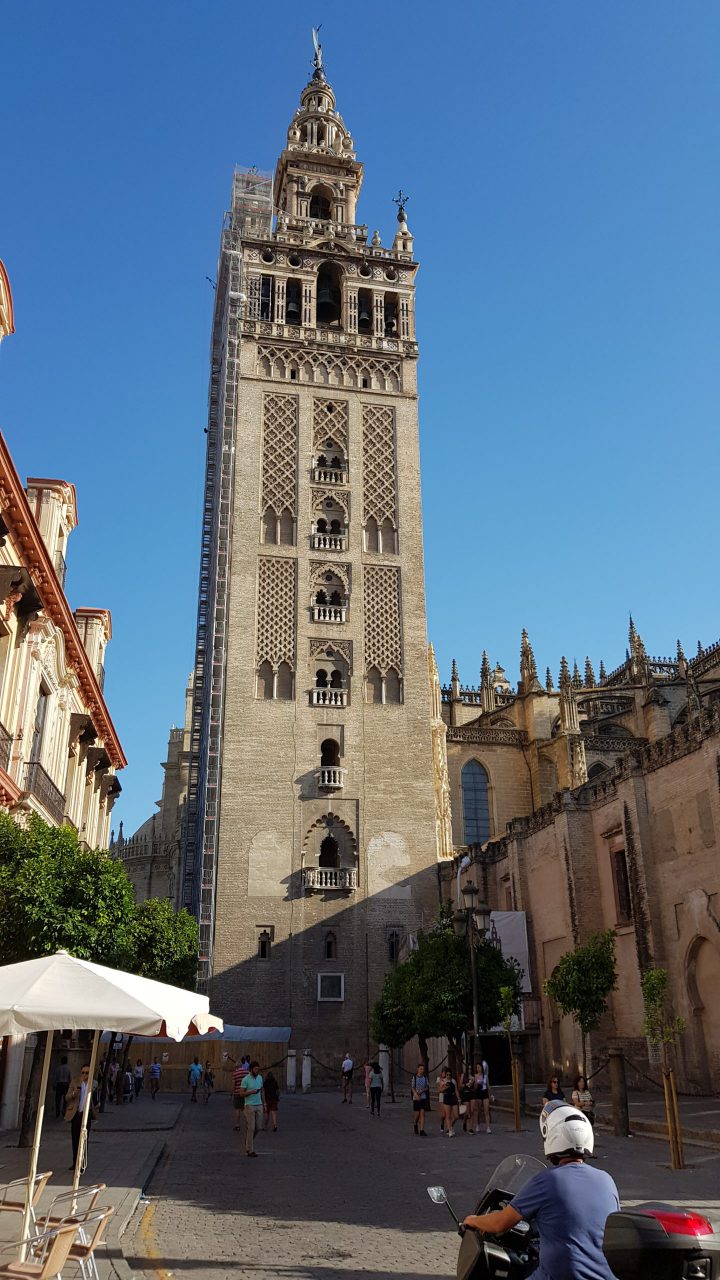
La Giralda is the bell tower of Seville Cathedral. Originally built as the minaret for the Great Mosque during the Almohad dynasty, it became the tallest tower in the world at 97.5 meters when Catholics added a Renaissance belfry top after the Reconquista. Today it stands 105 meters tall. Admission to the tower is €2.
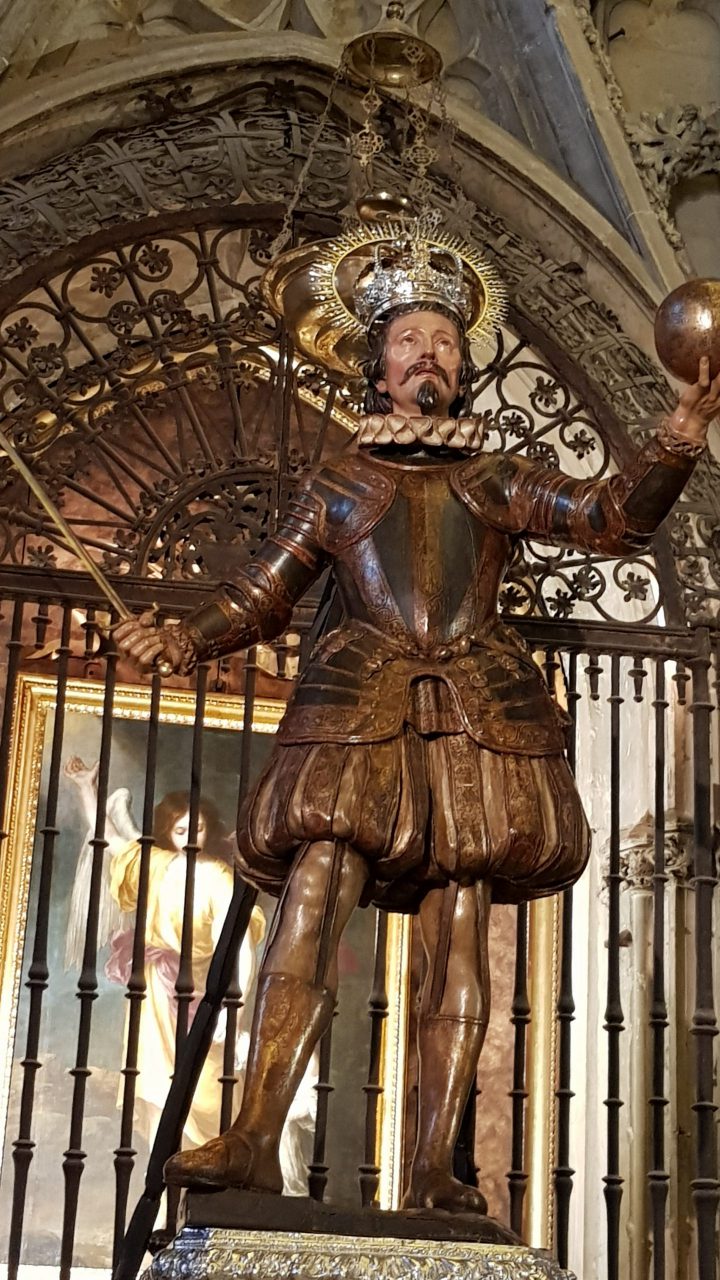
Seville Cathedral is especially famous for the Tomb of Christopher Columbus. The four allegorical figures carrying his bier represent the four kingdoms of Spain during Columbus’s lifetime: Castile, Aragon, Navarre, and León.
Alcázar of Seville
The Real Alcázar of Seville is a royal palace originally developed from a Moorish fort. It is one of the most beautiful and oldest royal palaces in Spain, and it remains in active use—the upper levels are still used by the Spanish royal family as their official residence in Seville.

Torre del Oro
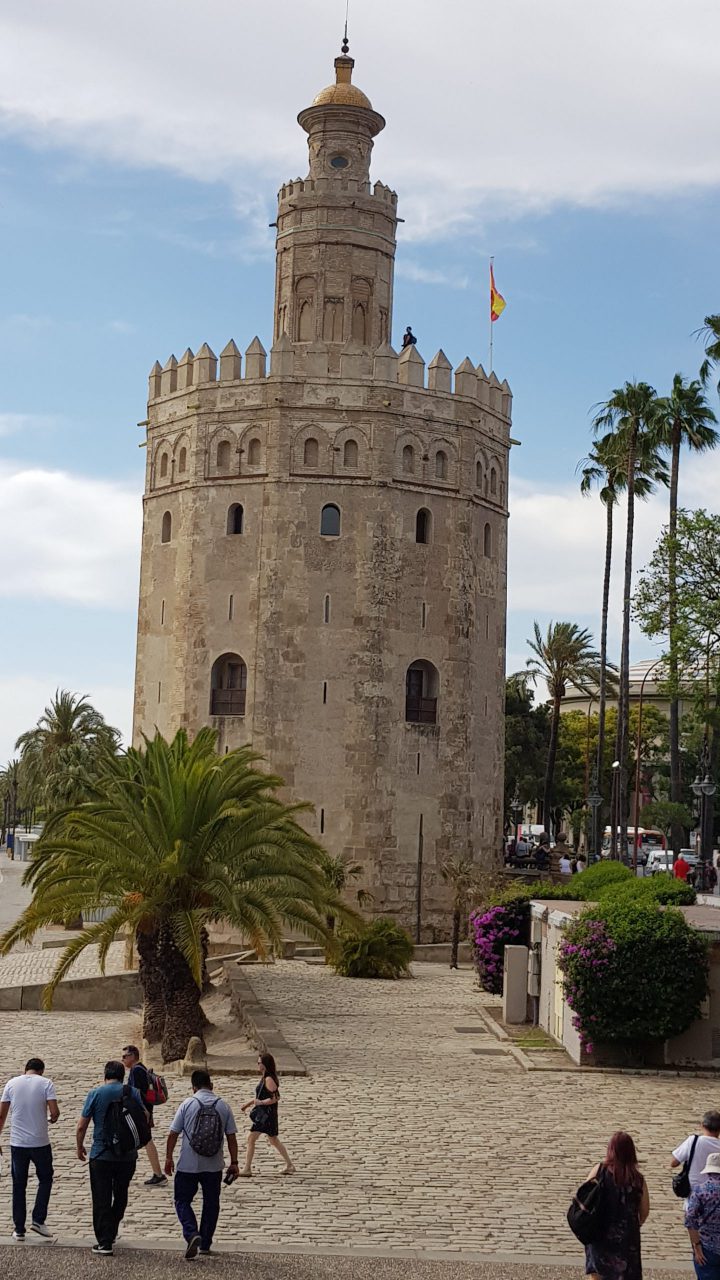
Torre del Oro (“Tower of Gold”) is a 12-sided military watchtower in Seville. Erected by the Almohad Caliphate to control river access to Seville via the Guadalquivir, it got its name from the golden sheen it cast upon the water, caused by its building materials (a mixture of mortar, lime, and pressed hay).
Plaza de España
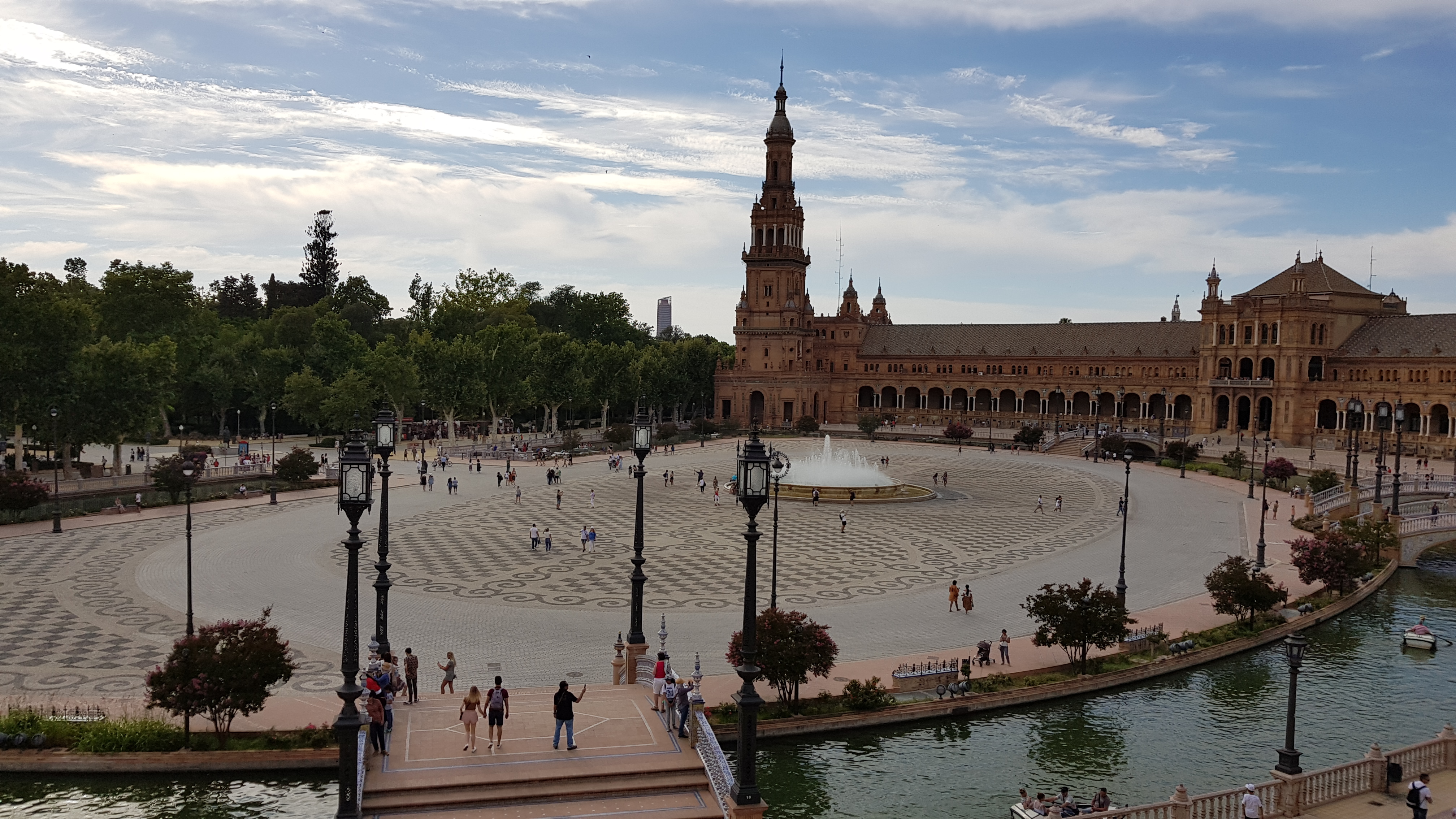
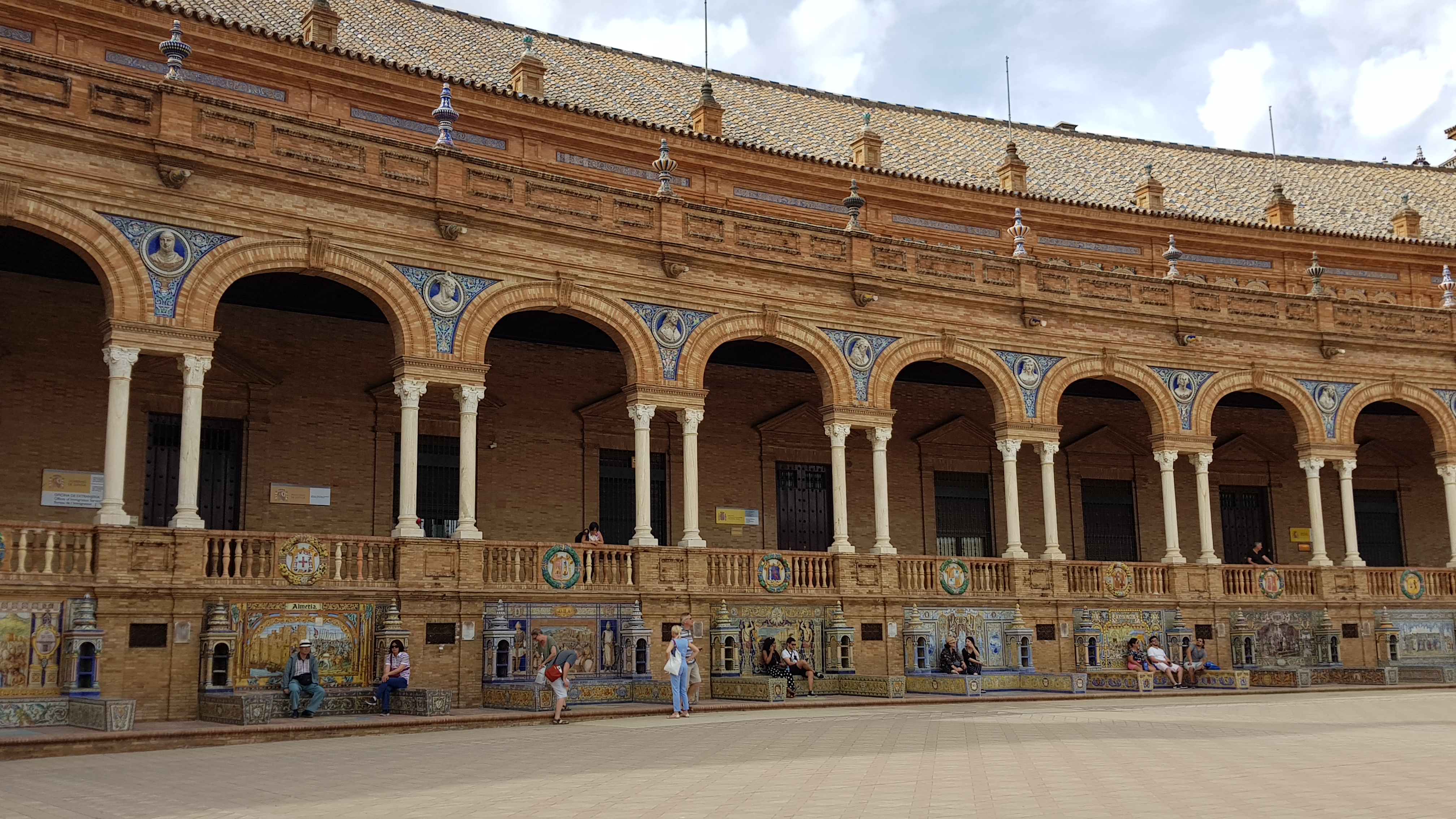
Plaza de España was built in 1928 for the Ibero-American Exposition of 1929. The Spanish Pavilion is an extraordinary semicircular building adorned with colorful ceramic tile alcoves depicting each of Spain’s provinces. In front of the building runs a scenic canal where you can rent a rowboat.
We wrapped up our tour of Seville with a delicious assortment of tapas.

Continued: Andalusia: Cádiz, Gibraltar, and Fuengirola